5600 Palm Lake Circle, Orlando Fl. 32819
info@ipircm.com
877-422-7221

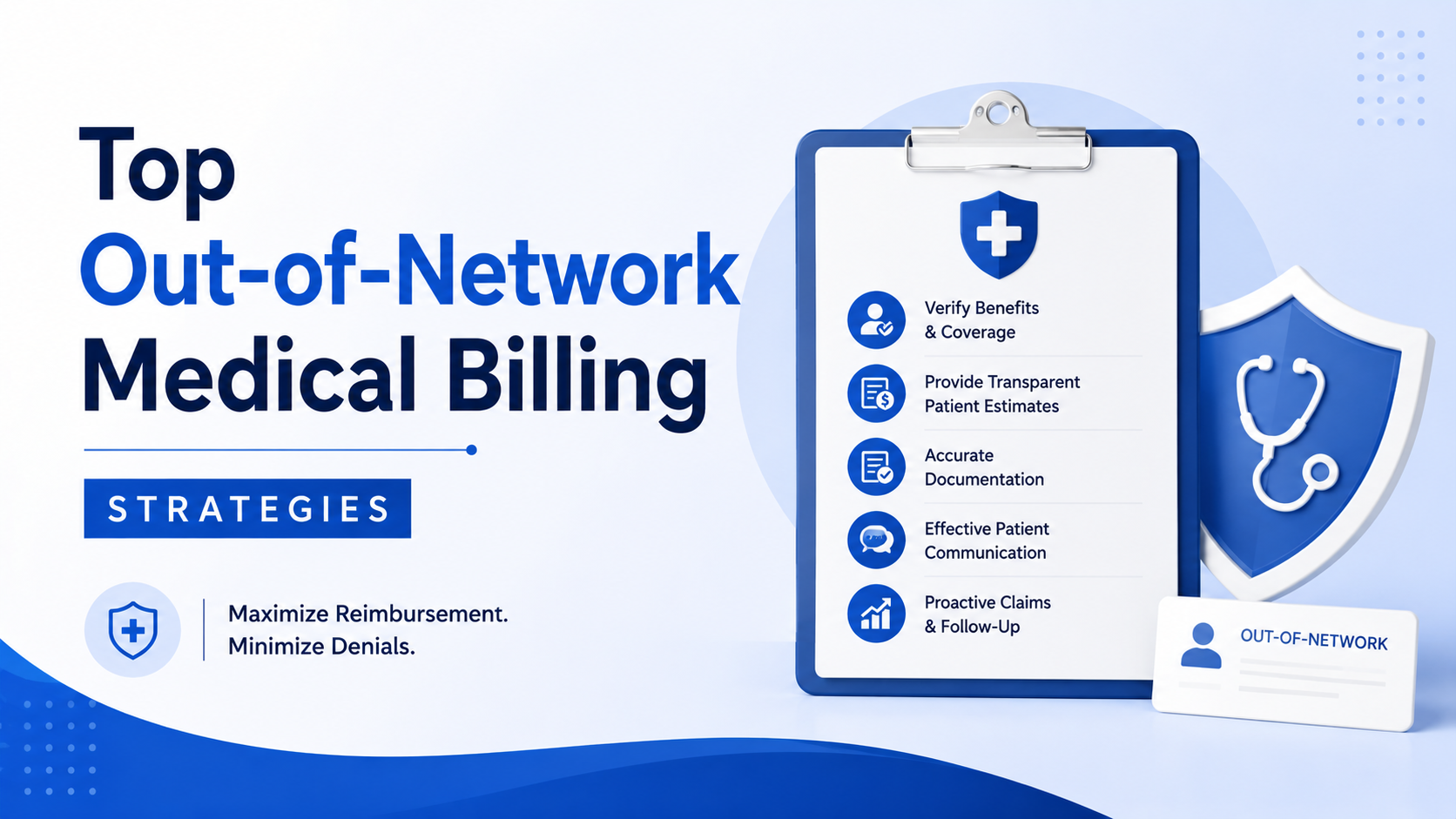
Out-of-network billing can help healthcare providers increase revenue, but it also comes with unique billing challenges. Insurance reimbursement delays, payment disputes, and claim denials are common problems when practices do not have the right billing process in place.
Many healthcare providers lose revenue because out-of-network claims require more attention and stronger follow-up compared to in-network billing. Using the right billing strategies can help practices improve collections and reduce payment delays.
Out-of-network medical billing happens when a healthcare provider does not have a contract with a patient’s insurance company. In these situations, providers may bill insurance companies directly or collect part of the payment from patients.
Since reimbursement rules vary between insurance companies, out-of-network billing often becomes more complex than standard billing processes. Practices need accurate documentation, strong claim follow-up, and proper patient communication to avoid revenue loss.
Out-of-network claims are more likely to face delays and denials because insurance companies carefully review these claims before approving payments.
Healthcare practices often face challenges such as:
Without a proper billing strategy, these problems can affect cash flow and overall practice revenue.
One of the most important out-of-network billing strategies is verifying patient benefits before treatment begins. Practices should clearly understand the patient’s out-of-network coverage, deductible amounts, and reimbursement policies.
This step helps healthcare providers avoid unexpected payment issues later. It also allows staff to explain patient financial responsibility before services are provided.
Insurance companies often request additional documentation for out-of-network claims. Missing or incomplete records can quickly lead to payment delays or claim denials.
Healthcare providers should make sure clinical notes, treatment details, diagnosis codes, and supporting documents are complete and accurate before submitting claims.
Accurate and timely claim submission is essential for improving out-of-network reimbursement rates. Small billing mistakes can slow down claim processing and increase denial risks.
Practices should regularly review claims before submission to reduce coding errors and missing information. Faster claim submission also helps improve cash flow.
Out-of-network billing often creates confusion for patients because they may not fully understand their insurance coverage or payment responsibility.
Clear communication helps reduce billing disputes and improves patient trust. Front desk and billing teams should explain estimated costs, reimbursement expectations, and payment policies before treatment whenever possible.
Denied out-of-network claims should never be ignored. Many denied claims can still be corrected and resubmitted successfully if practices have a proper denial management process.
Strong follow-up procedures help healthcare providers recover payments that might otherwise be lost. Tracking denial patterns can also help identify common billing mistakes.
Tracking reimbursement trends helps practices understand which insurance companies create the most payment delays or denial issues.
Regular reporting allows healthcare providers to identify billing weaknesses and improve claim submission strategies over time. Monitoring payment trends also helps practices make better financial decisions.
Out-of-network billing rules and insurance requirements change frequently. Billing teams need ongoing training to stay updated on payer policies, coding changes, and documentation requirements.
Well-trained staff members are more likely to submit accurate claims, reduce denials, and improve reimbursement rates.
An organized billing process helps healthcare practices handle out-of-network claims more efficiently. Accurate patient information, faster claim submission, proper documentation, and strong follow-up all contribute to better financial performance.
Practices that regularly review their billing workflows are usually better prepared to manage complex out-of-network claims and reduce revenue loss.
Out-of-network billing requires accuracy, strong follow-up, and a reliable billing process to reduce denials and improve reimbursement rates. Small billing mistakes can quickly lead to delayed payments and lost revenue.
IPIRCM helps healthcare providers with professional medical billing services designed to improve claim accuracy, strengthen denial management, and support better payment collection. With the right billing support, practices can manage out-of-network claims more efficiently and improve overall financial performance.


“We built IPIRCM to set standards, not follow trends — helping your practice move forward without limits.”
We didn't build these companies to follow trends — we built them to set standards. From IPIPAK's trusted BPO, to IPIRCM's full-cycle U.S. medical billing, to IPITECHNO's cutting-edge IT solutions, every company exists to move your business forward without limits.
Together we are more than three brands. We are one vision: to make business simpler, faster, and stronger for those who dare to grow. It is an honor to lead this group — and a greater honor to serve you.