5600 Palm Lake Circle, Orlando Fl. 32819
info@ipircm.com
877-422-7221

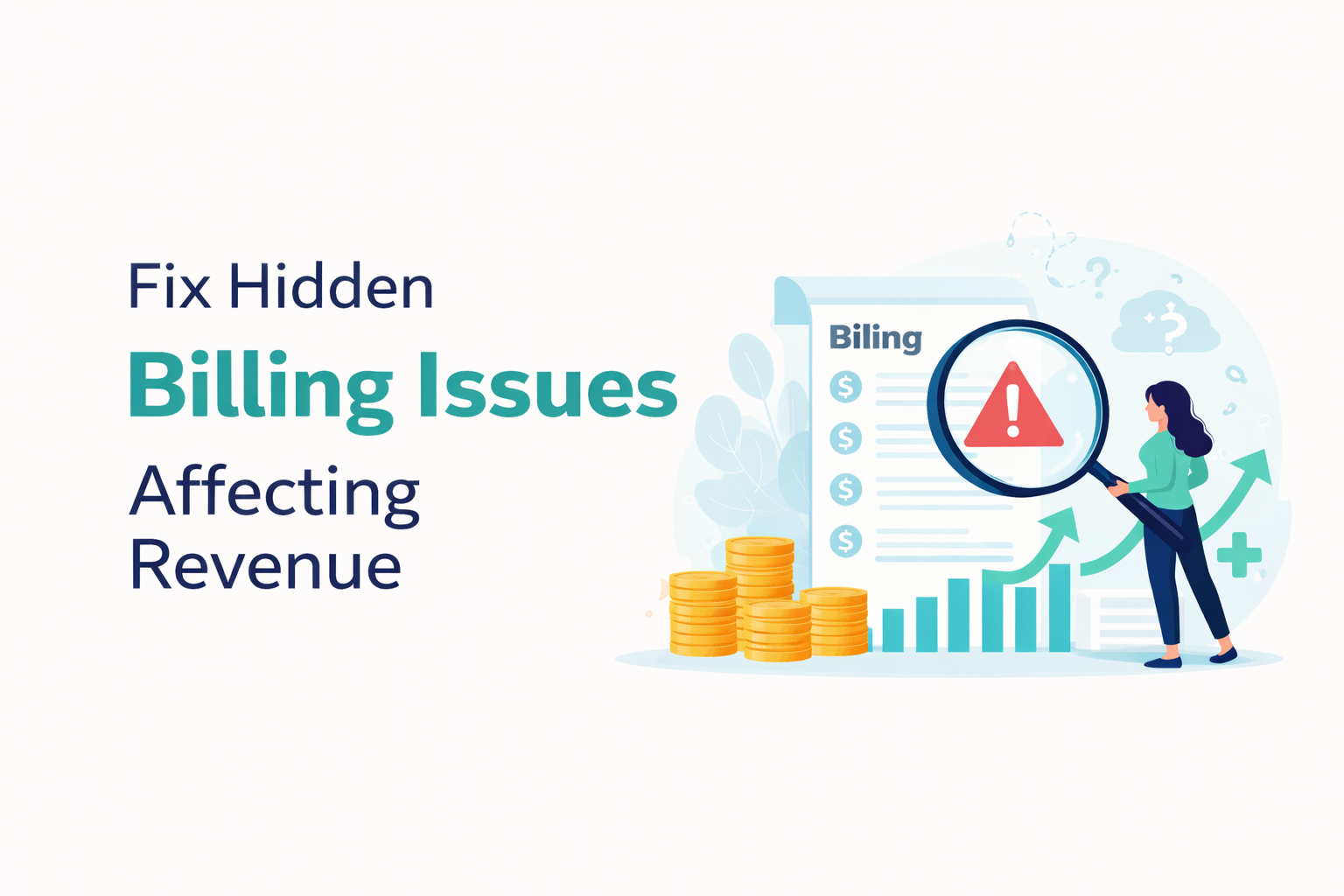
Unnoticed billing errors can quietly drain your revenue without any obvious warning signs. Many clinics and businesses focus on increasing patient volume or sales but overlook small inefficiencies in their billing processes that lead to consistent financial losses.
These hidden issues can impact cash flow, increase claim denials, and create unnecessary delays in payments. Over time, they add up and affect overall business performance.
You’ll learn what hidden billing issues are, how to identify them, and proven ways to fix them so you can protect your revenue and improve your billing efficiency.
Hidden billing issues are small errors or inefficiencies in the billing process that are not immediately visible but still affect revenue over time. These issues often go unnoticed because they don’t always cause immediate failures, yet they slowly reduce the amount of money a business should be collecting.
They are commonly overlooked due to complex billing systems, lack of regular audits, or limited staff awareness. In many cases, teams focus only on major errors while minor issues continue to slip through.
These problems usually occur in areas like medical coding, claim submissions, insurance verification, and payment follow-ups, making them difficult to detect without a structured review process.
Regular billing audits help uncover errors and inconsistencies in the billing process. Internal audits provide quick checks for daily accuracy, while external audits offer a more detailed and unbiased review of revenue cycle performance.
Denial reports highlight the specific reasons claims are being rejected. Reviewing these reports regularly helps identify recurring patterns and fix underlying issues instead of just resubmitting claims.
Monitoring key metrics such as clean claim rate, accounts receivable (AR) days, and denial rate provides a clear picture of billing efficiency and revenue health.
Patient feedback and billing complaints often reveal hidden errors like incorrect charges or unclear statements that may not be visible in internal reports.
Tracking rejection trends over time helps identify systematic issues in coding, documentation, or submission workflows that may be affecting revenue consistency.
Regular training ensures billing and coding staff stay updated with the latest guidelines, reducing errors caused by outdated knowledge or incorrect practices.
Automation helps minimize manual errors, speeds up claim processing, and improves overall accuracy in billing workflows.
Clear and complete documentation ensures all services are properly recorded, reducing the risk of missed or incorrect charges.
Checking patient eligibility in advance prevents claim denials caused by inactive or limited insurance coverage.
A structured denial management system helps quickly identify, correct, and resubmit rejected claims to recover lost revenue efficiently.
Better billing support improves revenue by ensuring accurate claim processing, reducing errors, and minimizing claim rejections. This leads to faster reimbursements and more consistent cash flow, helping maintain financial stability.
It also reduces the administrative burden on internal teams, allowing them to focus on core operations. At the same time, expert billing support improves compliance with updated coding and insurance rules, lowering the risk of revenue leakage.
Hidden billing issues may seem minor, but they can significantly impact revenue if left unaddressed. Identifying and fixing these problems early helps improve cash flow, reduce claim denials, and strengthen overall billing performance.
With a proactive approach, businesses can minimize revenue leakage through structured processes, regular audits, and improved billing practices. iPiRCM’s Billing Review Service can further help uncover hidden errors, optimize billing accuracy, and improve overall revenue cycle efficiency, ensuring more consistent and reliable reimbursements.


“We built IPIRCM to set standards, not follow trends — helping your practice move forward without limits.”
We didn't build these companies to follow trends — we built them to set standards. From IPIPAK's trusted BPO, to IPIRCM's full-cycle U.S. medical billing, to IPITECHNO's cutting-edge IT solutions, every company exists to move your business forward without limits.
Together we are more than three brands. We are one vision: to make business simpler, faster, and stronger for those who dare to grow. It is an honor to lead this group — and a greater honor to serve you.