5600 Palm Lake Circle, Orlando Fl. 32819
info@ipircm.com
877-422-7221

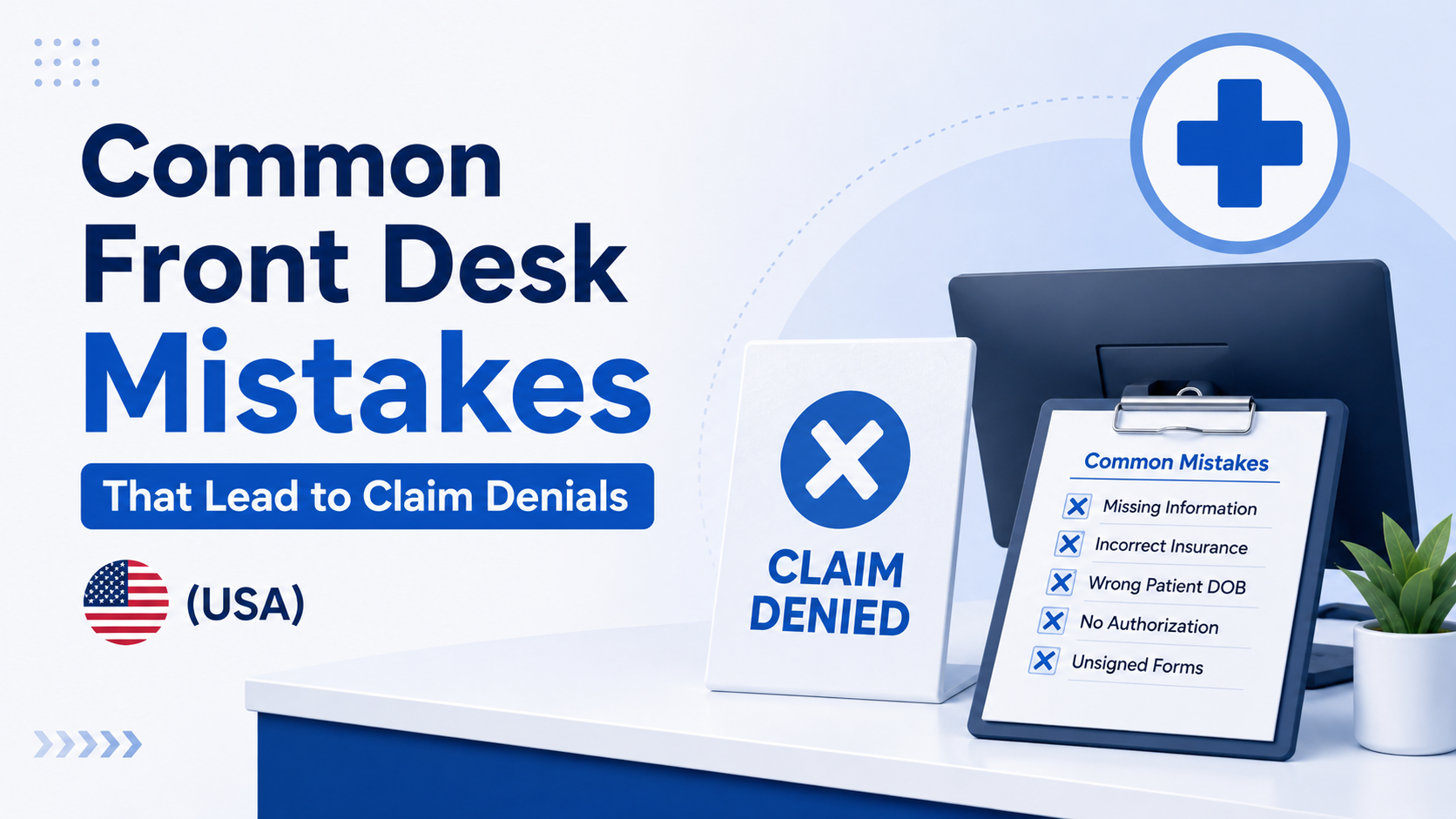
A single front desk mistake can turn into a denied insurance claim, delayed payment, or lost revenue for a healthcare practice. Small errors during patient registration or insurance verification often create bigger billing problems later.
In healthcare practices across the USA, the front desk plays an important role in the claim submission process. Accurate patient information, proper scheduling, and insurance verification can help reduce claim denials and improve payment collection.
The front desk is responsible for collecting patient information before the claim is ever submitted. If incorrect details enter the system at this stage, the billing team may not notice the issue until the insurance company rejects the claim.
Even minor mistakes can create serious problems,
including:
Many denied claims are preventable when front desk operations are handled correctly.
Incorrect patient details are one of the biggest reasons for claim denials in healthcare practices across the USA. Simple mistakes like spelling errors, wrong insurance ID numbers, or outdated contact information can cause insurance companies to reject claims.
Insurance providers compare submitted claim details with their records before approving payments. Front desk staff should always verify patient information during every visit to reduce billing problems and avoid delays.
Insurance eligibility verification is an important step before a patient receives treatment. If coverage is inactive or the service is not included in the plan, the insurance company may deny the claim.
Many front desk teams skip proper verification because of busy schedules or rushed appointments. Checking coverage details before the visit helps practices avoid unpaid balances and unexpected billing issues.
Some treatments, tests, and medical procedures require prior authorization from the insurance company. If approval is not received before treatment, the claim may be denied completely.
This problem usually happens because of poor communication between departments or unclear responsibilities. A proper authorization process helps practices avoid revenue loss and unnecessary claim rework.
Many patients have primary and secondary insurance plans, but selecting the wrong one can delay payments and create claim denials. Old insurance details in the system can also create confusion during billing.
Front desk staff should confirm updated insurance information during every patient visit. Reviewing insurance cards carefully helps reduce mistakes and improves claim accuracy.
Failing to collect co-pays at check-in can create financial pressure for healthcare practices. Many patients are less likely to pay balances after leaving the office.
Some front desk employees feel uncomfortable discussing payments, while others forget to request co-pays completely. A standard payment collection process helps improve revenue collection and reduces outstanding balances.
Appointment scheduling mistakes can create billing and coding issues later in the revenue cycle. Incorrect provider selection or wrong appointment types often lead to claim processing problems.
Scheduling errors can also affect referrals and insurance requirements. Accurate scheduling procedures help practices avoid confusion, reduce denials, and improve workflow efficiency.
Claim denials do more than delay payments. They create additional work for staff and reduce the financial stability of the practice.
When claims are denied, staff must spend extra time:
This increases administrative costs and slows down revenue collection.
In some cases, denied claims may never be recovered, especially if filing deadlines are missed.
Healthcare practices can lower denial rates by improving front desk operations. Better workflows and accurate patient handling can help reduce billing errors and improve claim approval rates.
Creating a clear registration process helps front desk staff collect accurate patient information during every visit. Organized registration procedures reduce errors that often lead to claim denials and payment delays.
Healthcare practices should regularly review patient records, insurance details, and referral information to maintain accuracy. Small improvements in registration workflows can make billing processes much smoother.
Modern insurance verification tools help healthcare practices confirm patient coverage quickly and accurately before appointments. These systems reduce manual mistakes and improve overall billing efficiency.
Automated eligibility checks also help staff identify coverage issues early in the process. This allows practices to avoid denied claims and reduce unnecessary administrative work.
Regular staff training helps front desk employees stay updated on insurance requirements, billing procedures, and patient registration guidelines. Well-trained teams are less likely to make costly billing mistakes.
Even experienced employees benefit from refresher training sessions because insurance policies and healthcare regulations change frequently in the USA.
Healthcare practices should regularly review denial reports to identify common front desk-related problems. Tracking denial patterns helps management understand where workflow improvements are needed.
Monitoring denial trends also helps practices reduce repeated mistakes and improve claim approval rates over time. Consistent review processes can strengthen overall revenue cycle performance.
Accurate claim submission plays a major role in reducing claim denials and payment delays. Even if front desk processes are handled properly, claims can still be rejected if billing information is incomplete or submitted incorrectly.
IPIRCM helps healthcare providers across the USA with professional claim submission services, helping practices improve billing accuracy, reduce denials, and speed up insurance reimbursements.
Simple front desk mistakes can lead to claim denials, delayed payments, and revenue loss. Errors in patient information, insurance verification, scheduling, and authorizations often create billing problems for healthcare practices.
Improving front desk accuracy can help reduce denials and improve payment collection. IPIRCM supports healthcare providers across the USA with reliable claim submission services that help practices submit cleaner and more accurate claims.


“We built IPIRCM to set standards, not follow trends — helping your practice move forward without limits.”
We didn't build these companies to follow trends — we built them to set standards. From IPIPAK's trusted BPO, to IPIRCM's full-cycle U.S. medical billing, to IPITECHNO's cutting-edge IT solutions, every company exists to move your business forward without limits.
Together we are more than three brands. We are one vision: to make business simpler, faster, and stronger for those who dare to grow. It is an honor to lead this group — and a greater honor to serve you.