5600 Palm Lake Circle, Orlando Fl. 32819
info@ipircm.com
877-422-7221

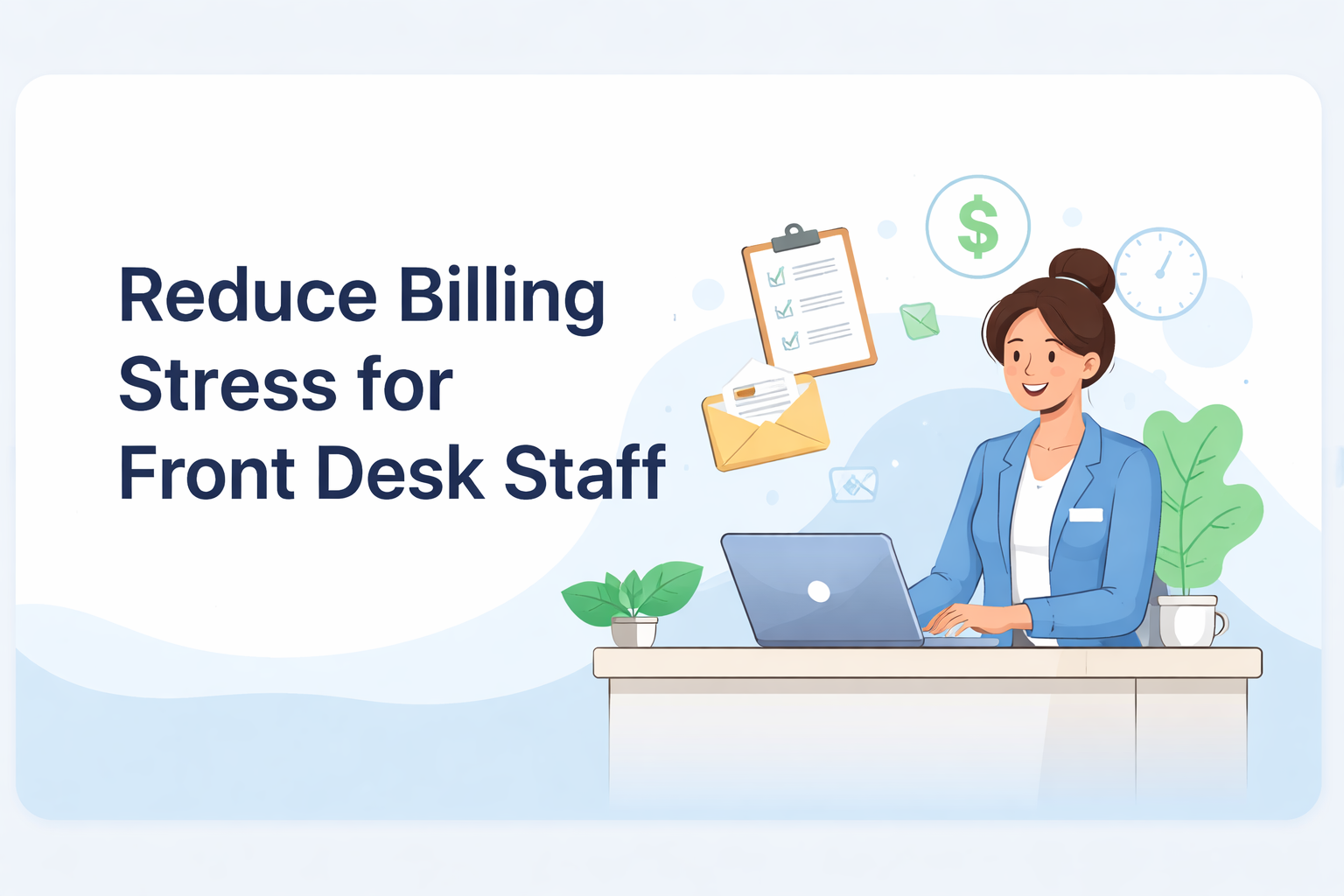
Billing at the front desk often becomes stressful because it sits right between service and money. Staff are expected to handle check-ins, answer questions, verify insurance, and process payments all at the same time. When things aren’t clear or systems are slow, small mistakes start piling up.
This stress doesn’t just affect the staff. It slows down operations, creates billing errors, and can lead to frustrated customers or patients. The good news is that with the right processes and tools, billing can become much smoother and easier to manage.
Billing stress usually comes from a mix of time pressure, manual work, and unclear processes. Most front desk staff are handling multiple tasks at once, so even small issues can quickly build up.
Insurance verification delays are a major cause, especially when details are missing or need to be confirmed manually. Manual data entry also increases the chances of errors, which then take extra time to fix. In many cases, billing rules are not clearly documented, so staff rely on guesswork or different interpretations.
On top of that, high customer or patient volume creates constant time pressure, leaving little room to double-check details. All of these factors together make billing one of the most stressful parts of front desk work.
Automating billing removes repetitive manual tasks like invoice creation, payment logging, and reminders. It reduces human error and speeds up daily operations, especially during busy hours when staff are handling multiple patients or customers at once. This also helps staff focus more on customers instead of getting stuck in routine billing work.
A fixed billing workflow ensures every staff member follows the same steps. This reduces confusion, avoids missed charges, and makes onboarding new staff much easier. Consistency is key to reducing stress and errors. It also creates a predictable system where mistakes are easier to trace and fix.
Pre-verifying insurance saves a lot of time at the front desk. It prevents last-minute surprises, reduces claim rejections, and helps staff give accurate billing information upfront instead of correcting issues later. This makes the entire check-in process smoother and faster for everyone involved.
Simple billing checklists act as a safety net. They ensure that no step is missed during busy periods, such as collecting details, applying charges, or confirming payments. This improves accuracy and reduces rework. Checklists also help reduce mental load on staff during peak hours.
Digital forms eliminate handwritten errors and reduce duplicate data entry. They also speed up the check-in process by allowing information to flow directly into the billing system without manual re-entry. This improves both accuracy and overall front desk efficiency.
Allowing payments before or after visits through online systems reduces pressure on front desk staff. It also shortens queues, improves cash flow, and makes the overall experience smoother for customers or patients. It also reduces billing delays and follow-up workload.
When billing and scheduling systems are connected, every appointment automatically syncs with billing records. This reduces missed charges, avoids confusion, and ensures nothing slips through the cracks. It helps create a fully connected system where data flows without manual effort.
Front desk billing becomes much easier when staff are properly trained and confident in their process. Without training, even simple tasks can take longer and lead to avoidable errors.
Regular billing training helps staff stay updated with procedures, insurance rules, and payment methods. It reduces confusion and builds consistency in daily work.
Clear communication training is also important so staff can explain charges, handle questions, and deal with difficult situations calmly and professionally.
Cross-training employees ensures that billing work doesn’t depend on just one person. This keeps operations smooth even when someone is absent or busy.
Front desk billing becomes much easier when supported by the right digital tools. Instead of relying on manual entry and paperwork, modern systems help automate repetitive tasks, reduce human errors, and speed up daily operations. This not only improves accuracy but also allows staff to focus more on customers or patients rather than getting stuck in administrative work.
When billing, scheduling, and payments are properly integrated, the entire workflow becomes more organized. Staff can quickly access information, process transactions faster, and avoid common issues like duplicate entries or missed charges. Over time, this creates a smoother and less stressful environment at the front desk.
Most billing problems at the front desk happen due to unclear communication rather than system issues. When pricing, coverage, or payment expectations are not explained properly, it leads to confusion at the time of payment and creates unnecessary stress for staff. This also slows down the checkout process and increases back-and-forth discussions.
To avoid this, communication should be simple, direct, and given before the service starts. When customers clearly understand what they are being charged for and how they can pay, the entire billing process becomes smoother, faster, and far less stressful for everyone involved.
Billing errors at the front desk usually come from small oversights that build up under pressure. Even minor mistakes in customer details, insurance information, or service codes can lead to delays, rework, and payment issues. These errors slow down operations and increase stress for staff who have to fix them later.
To reduce these problems, accuracy should be treated as part of the daily routine rather than an extra step. When information is double-checked and records are kept updated, the chances of mistakes drop significantly.
When billing at the front desk is well organized and streamlined, staff work faster, make fewer mistakes, and handle busy hours with less pressure, while customers experience quicker and smoother check-ins and payments, resulting in shorter waiting times.
Fewer billing errors, improved customer satisfaction, better staff productivity, and more accurate financial records.
If you want to reduce billing stress, improve accuracy, and speed up front desk operations, getting the right support makes all the difference. A well-structured billing system backed by professionals can help your staff focus more on patients instead of paperwork and repetitive billing tasks.
IPIRCM provides specialized Medical billing services designed to streamline front desk operations, reduce errors, and improve overall revenue cycle efficiency. Their solutions help healthcare practices manage billing more smoothly while keeping daily workflows stress-free.


“We built IPIRCM to set standards, not follow trends — helping your practice move forward without limits.”
We didn't build these companies to follow trends — we built them to set standards. From IPIPAK's trusted BPO, to IPIRCM's full-cycle U.S. medical billing, to IPITECHNO's cutting-edge IT solutions, every company exists to move your business forward without limits.
Together we are more than three brands. We are one vision: to make business simpler, faster, and stronger for those who dare to grow. It is an honor to lead this group — and a greater honor to serve you.