5600 Palm Lake Circle, Orlando Fl. 32819
info@ipircm.com
877-422-7221

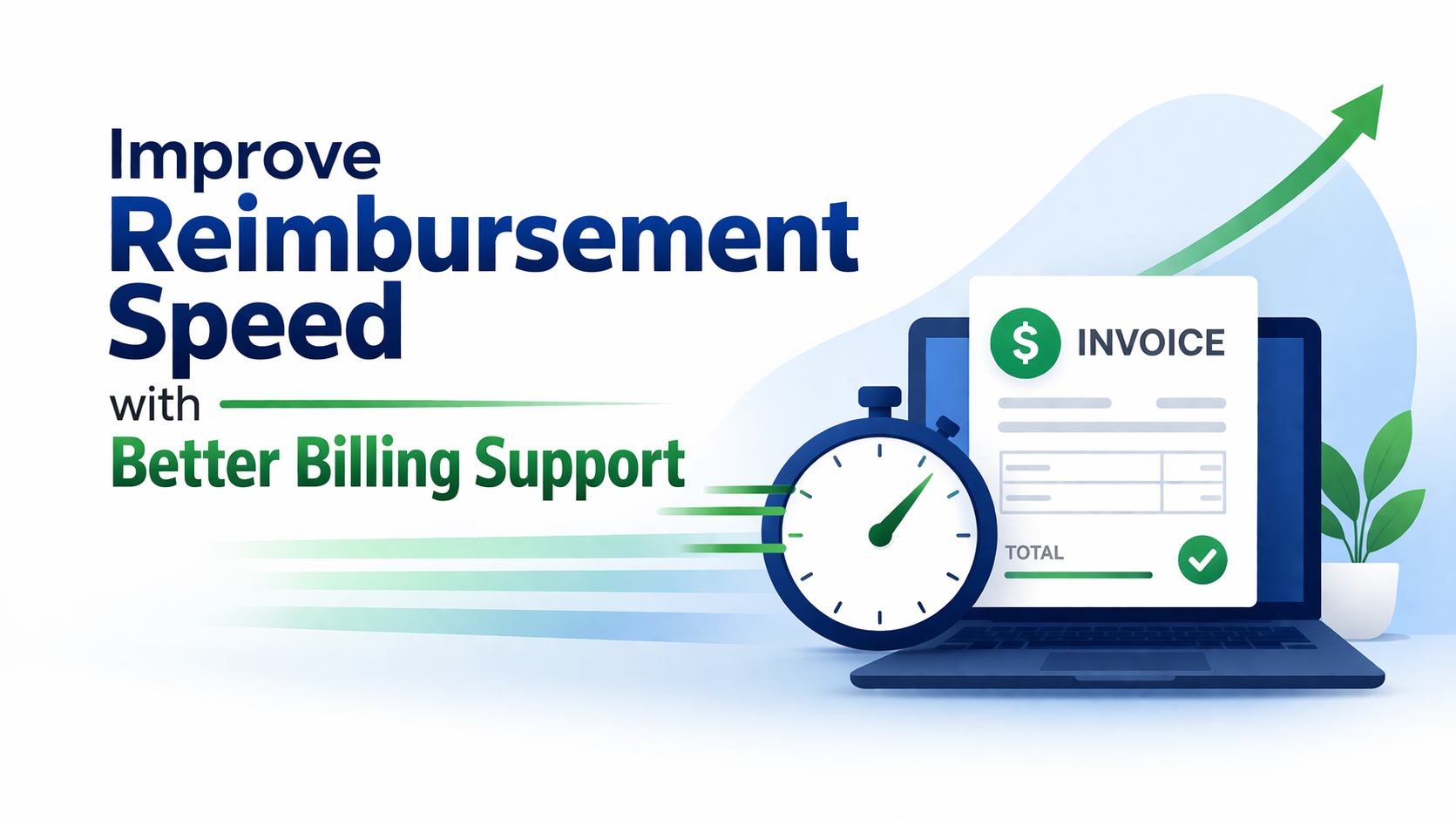
Delayed reimbursements can slow down your business and create cash flow problems. Many companies and healthcare providers struggle to get paid on time due to billing errors, claim denials, or slow processes.
Better billing support helps fix these issues. It ensures claims are accurate, submitted on time, and followed up properly. This leads to faster payments and fewer delays.
In this article, you will learn why reimbursements get delayed and how improving billing support can help you receive payments faster.
Reimbursement in billing means getting paid for services or products provided. In healthcare, it usually refers to payments from insurance companies to providers after a claim is submitted.
The speed of reimbursement is important because it affects cash flow. Faster payments help businesses run smoothly, while delays can cause financial stress.
The main parties involved are the service provider, the payer (such as an insurance company), and the billing team that handles claims and payments.
Slow reimbursements usually happen due to small but costly mistakes in the billing process. These issues can delay payments or even lead to claim rejections.
Common causes include:
Fixing these problems is key to getting paid faster.
Billing support helps speed up reimbursements by ensuring claims are accurate and submitted on time. This reduces errors and increases approval on the first attempt.
It also handles denied claims quickly and follows up with payers to avoid delays. With the help of automation tools, billing teams can manage claims more efficiently.
Accurate coding and clear documentation reduce errors and improve claim approval rates. This helps prevent delays caused by incomplete or incorrect information.
Proper documentation also ensures compliance with payer requirements. When records are clear, claims are processed faster with fewer rejections.
Using billing software helps reduce manual work, minimize errors, and speed up claim submission. It also improves overall efficiency in handling large volumes of claims.
Automation allows faster data entry and real-time tracking of claims. This reduces delays caused by human error and manual processing.
Track denial reasons and resubmit claims quickly to avoid long delays. Understanding why claims are denied helps fix issues early.
A structured denial management system improves recovery rates. It ensures rejected claims are corrected and resubmitted without wasting time.
Regular follow-ups and quick issue resolution help keep claims moving. Clear communication reduces confusion and processing delays.
Maintaining contact with payers ensures faster responses to claim issues. It also helps resolve disputes more efficiently.
Third-party billing services can improve efficiency and reduce workload. They bring expertise and faster processing systems.
Outsourcing helps organizations focus on core operations while experts handle billing. Companies like IPIRCM provide specialized medical billing services that streamline the entire revenue cycle and help ensure faster, more reliable reimbursements.
EHR systems store patient data in a digital format, making it easier to access and share information. This reduces paperwork and speeds up the billing process.
They also improve accuracy by keeping all records organized in one place. This helps reduce errors during claim submission.
RCM systems manage the entire billing process from patient registration to final payment. They help track claims and ensure nothing is missed.
These systems improve efficiency by automating key billing tasks. This leads to faster reimbursements and better cash flow management.
AI tools help detect errors in claims before submission. This reduces the chances of rejection and speeds up approvals.
They also analyze billing patterns to improve decision-making. This makes the billing process smarter and more accurate.
Dashboards provide real-time insights into billing performance. They help track important metrics like claim status and payment delays.
With clear data visibility, teams can quickly identify issues. This helps improve overall reimbursement speed.
Faster reimbursements improve cash flow and help organizations manage daily operations smoothly. When payments arrive on time, financial pressure is reduced.
They also lower administrative stress by reducing the need for constant follow-ups. This allows teams to focus more on core work instead of chasing payments.
Quick reimbursements improve overall efficiency and support business growth. They also enhance trust between providers and payers.
This measures how long it takes to receive payment after submitting a claim. Lower AR days mean faster reimbursements and healthier cash flow.
It helps identify delays in the billing cycle and shows how efficiently payments are collected.
This shows the percentage of claims submitted without errors. A higher rate leads to fewer rejections and quicker approvals.
Improving this reduces rework and speeds up the entire reimbursement process.
This measures how many claims are rejected by payers. A high denial rate often indicates issues in coding or documentation.
Reducing denials improves revenue flow and minimizes resubmission delays.
This tracks how many claims are approved on the first submission. A higher rate means faster payments with fewer delays.
It reflects strong billing accuracy and reduces administrative workload.
Following these practices helps improve billing efficiency and speeds up reimbursements.
Improving reimbursement speed depends on accurate billing, timely claim submission, and strong follow-up processes. When these areas are managed well, cash flow becomes more stable and predictable.
Using the right tools, tracking performance, and following best practices can significantly reduce delays and claim rejections. Consistency is key to maintaining an efficient billing cycle.
Companies like IPIRCM help streamline this entire process through professional medical billing support. Their expertise in revenue cycle management helps healthcare providers reduce errors and achieve faster, more reliable reimbursements.


“We built IPIRCM to set standards, not follow trends — helping your practice move forward without limits.”
We didn't build these companies to follow trends — we built them to set standards. From IPIPAK's trusted BPO, to IPIRCM's full-cycle U.S. medical billing, to IPITECHNO's cutting-edge IT solutions, every company exists to move your business forward without limits.
Together we are more than three brands. We are one vision: to make business simpler, faster, and stronger for those who dare to grow. It is an honor to lead this group — and a greater honor to serve you.