5600 Palm Lake Circle, Orlando Fl. 32819
info@ipircm.com
877-422-7221

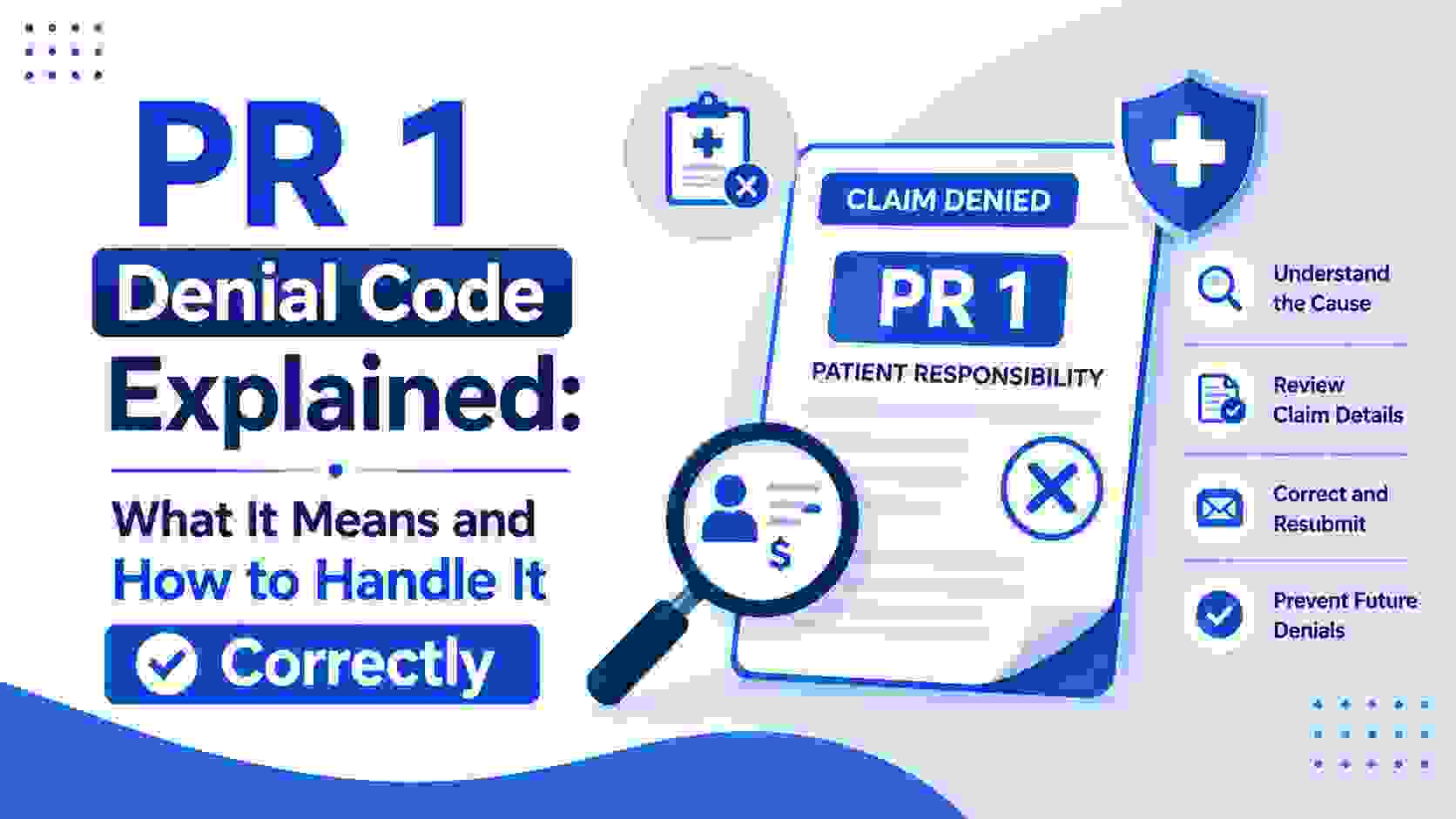
Seeing PR 1 on a remittance advice often causes more confusion than it should. Unlike many denial codes that signal something went wrong with a claim, PR 1 usually means the claim was processed correctly and the balance is simply the patient’s responsibility. The challenge isn’t understanding what PR 1 means in isolation, it’s knowing how to apply it correctly, communicate it to patients, and avoid the billing errors that often get bundled in alongside it.
This guide breaks down what PR 1 actually represents, why it appears on a claim, and how billing teams can handle it accurately from start to finish.
PR 1 stands for Patient Responsibility, Deductible Amount. It appears on an Explanation of Benefits (EOB) or Electronic Remittance Advice (ERA) when a payer applies part or all of a claim amount toward the patient’s annual deductible rather than paying it directly.
The “PR” portion of the code identifies this as a Patient Responsibility adjustment, meaning the balance is not being denied outright, it’s being shifted to the patient because their deductible hasn’t been met yet for the plan year. The “1” specifically indicates that the reason is the deductible amount, distinguishing it from other patient responsibility codes tied to copays, coinsurance, or non-covered services.
A deductible is the amount a patient must pay out of pocket before their insurance plan starts covering costs at the agreed rate. Until that threshold is met, the payer applies eligible charges directly to the deductible instead of reimbursing the practice.
PR 1 typically shows up in a few common situations:
PR 1 is easy to confuse with other codes on a remittance advice, especially for staff who are newer to reading EOBs. Understanding the distinction matters because each code requires a different response from the billing team.
PR 1 (Deductible Amount): The payer applied the charge to the patient’s deductible. This is not a denial in the traditional sense; it simply shifts responsibility to the patient.
PR 2 (Coinsurance Amount): The patient owes a percentage of the allowed amount after the deductible has been met, based on their plan’s coinsurance terms.
PR 3 (Copayment Amount): A fixed dollar amount the patient owes for the visit, typically collected at the time of service.
CO (Contractual Obligation) codes: These indicate the provider must write off the amount based on the contracted rate with the payer, and the patient cannot be billed for it.
Mixing up PR codes with CO codes is one of the more costly billing mistakes a practice can make, since billing a patient for an amount that should have been written off under a contractual obligation can create compliance issues and damage patient trust.
Because PR 1 reflects a legitimate application of deductible rules rather than a claim error, the response is less about appealing and more about accurate processing and clear patient communication.
Steps to follow:
While PR 1 is usually applied correctly, it’s worth verifying rather than assuming every instance is accurate. A payer system error, an outdated deductible balance, or a mismatch between the patient’s actual plan and what’s on file can occasionally cause PR 1 to be applied incorrectly.
Signs worth double-checking include a deductible amount that doesn’t match the patient’s known plan details, a PR 1 adjustment appearing on a service that should have been covered under a different benefit category, or a deductible balance that doesn’t align with what the payer portal shows for that patient. When something looks off, contacting the payer directly to confirm deductible accumulation before billing the patient prevents unnecessary billing disputes.
Patients often don’t understand why they’re receiving a bill after their insurance was already billed, and PR 1 balances are one of the most common sources of that confusion. A short explanation on the patient statement, along with front-desk staff who can explain deductible logic in plain terms, reduces the number of billing questions and disputes a practice has to manage.
Verifying deductible status before the appointment, rather than after the claim comes back, also helps. Sharing an estimated out-of-pocket cost with the patient at the time of scheduling or check-in sets expectations early and reduces the surprise factor when the statement arrives later.
Deductible-related balances make up a significant portion of patient accounts receivable for many practices, particularly with the continued growth of high-deductible health plans. Practices that don’t have a consistent process for tracking, billing, and following up on PR 1 balances often see this revenue sit uncollected far longer than it should. Treating PR 1 balances with the same structured follow-up as any other receivable, rather than letting them fall into a general “patient balance” bucket, keeps this portion of revenue from slipping through the cracks.
Sorting out deductible-related balances like PR 1, keeping patient statements accurate, and following up consistently on unpaid amounts takes time that most front-office teams don’t have to spare. At IPIRCM, our Patient Billing & Collections service is built to manage these balances accurately from the start, communicate clearly with patients, and follow up consistently so deductible-related revenue doesn’t get left uncollected. If patient responsibility balances are piling up faster than your team can manage, reach out to IPIRCM at 877-422-7221 or visit ipircm.com to schedule a free consultation.


“We built IPIRCM to set standards, not follow trends — helping your practice move forward without limits.”
We didn't build these companies to follow trends — we built them to set standards. From IPIPAK's trusted BPO, to IPIRCM's full-cycle U.S. medical billing, to IPITECHNO's cutting-edge IT solutions, every company exists to move your business forward without limits.
Together we are more than three brands. We are one vision: to make business simpler, faster, and stronger for those who dare to grow. It is an honor to lead this group — and a greater honor to serve you.