5600 Palm Lake Circle, Orlando Fl. 32819
info@ipircm.com
877-422-7221

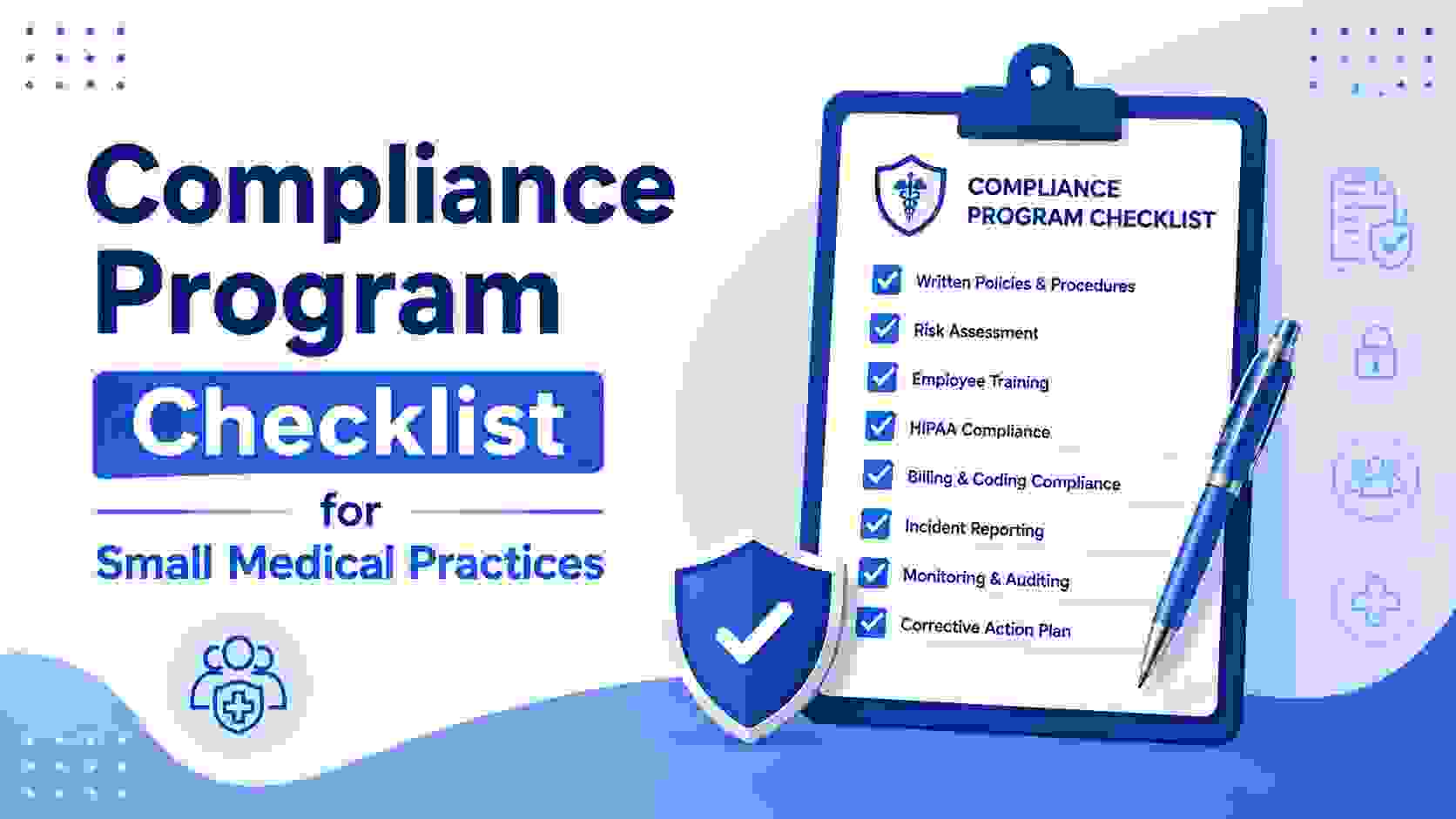
Compliance often gets treated as something only large hospital systems need to worry about, but small practices carry the same legal exposure with far fewer resources to manage it. A missed HIPAA update, an unscreened new hire, or an outdated policy manual can lead to penalties that hit a small practice far harder than a large health system with a dedicated legal team.
Building a compliance program doesn’t require a full-time compliance department. It requires a structured checklist, consistent follow-through, and clear ownership of each task. This guide breaks down what a functioning compliance program actually needs to cover for a small medical practice.
Federal and state healthcare regulations apply regardless of practice size. The Office of Inspector General has made clear that compliance programs are expected across the board, and enforcement doesn’t scale down for smaller operations. A solo practitioner or a five-provider group faces the same billing rules, privacy requirements, and licensing obligations as a large multi-specialty clinic.
Practices without a compliance program in place are also more likely to face steeper penalties when violations occur, since regulators often view the absence of a program itself as a sign of negligence rather than an oversight.
The OIG has outlined seven core elements that form the foundation of an effective compliance program, and these apply just as much to a small practice as to a hospital system.
Each of these elements needs to exist in some form, even in a scaled-down way suited to a small office.
Every practice needs documented policies covering the areas most likely to trigger regulatory scrutiny. These don’t need to be lengthy, but they do need to be specific to how the practice actually operates.
Policies to have in place:
Policies should be reviewed at least annually and updated whenever regulations change, not left untouched for years at a time.
Small practices often skip this step because they assume it requires hiring someone new, but the role can be assigned to an existing staff member, such as an office manager or physician, as long as they have the authority to enforce policies and the time to actually manage the responsibility. What matters is that one person is clearly accountable for compliance rather than the task being informally spread across the whole team, where it tends to fall through the cracks.
Training needs to happen at onboarding and then on a recurring basis, since regulations and payer requirements change frequently. New hires should be trained on HIPAA, billing integrity, and reporting procedures before they begin handling patient information or claims.
Training should cover:
Keeping signed training records for each employee provides documentation that the practice took training seriously if it’s ever questioned during an audit.
Before hiring any provider, employee, or vendor, and then on a monthly basis afterward, practices need to check the OIG List of Excluded Individuals and Entities along with the System for Award Management database. Billing for services connected to an excluded individual creates liability regardless of whether the practice knew about the exclusion, which makes this one of the more overlooked but high-risk items on a compliance checklist.
HIPAA compliance covers more than just keeping patient charts locked away. It includes how electronic health records are secured, how staff access patient information, and how the practice responds if a breach occurs.
Key HIPAA compliance tasks:
Billing errors, whether accidental or the result of poor documentation, are one of the most common sources of compliance risk for small practices. A regular internal audit process catches problems before they turn into denied claims or, in more serious cases, allegations of fraudulent billing.
Areas to audit regularly:
Monitoring should happen continuously, not just once a year during a formal review. Small practices can build this into existing workflows by reviewing a sample of claims each month, checking documentation against coding, and tracking denial patterns that might point to a systemic issue rather than a one-off mistake.
Staff need a clear, confidential way to report suspected compliance issues without fear of retaliation. This can be as simple as a direct line to the compliance officer or an anonymous reporting form, but it needs to be communicated to staff and actually used when concerns are raised. A policy that exists on paper but isn’t reinforced in practice doesn’t hold up well if a real issue surfaces later.
When a problem is identified, whether through an internal audit, a staff report, or an external audit, the response needs to be prompt and documented. This typically means investigating the issue, correcting the underlying cause, repaying any overpayments identified, and updating policies or training to prevent recurrence. Self-disclosing significant issues to the appropriate federal agency is often a better path than waiting for the issue to be found externally.
Compliance also extends to how providers are credentialed and enrolled with payers. Incomplete credentialing files, expired licenses, or lapsed malpractice coverage can all create compliance gaps that affect billing eligibility. Keeping credentialing files current and reviewing them on a set schedule prevents these gaps from turning into denied claims or enrollment issues down the line.
A checklist only works if it’s tied to actual dates. Small practices benefit from mapping compliance tasks onto a recurring calendar rather than treating them as one-time projects.
A basic compliance calendar might include:
Keeping a compliance program running consistently takes time that small practices often don’t have to spare, especially when billing accuracy, exclusion screening, and documentation reviews all need ongoing attention. At IPIRCM, our Billing Review service helps practices catch coding errors, documentation gaps, and billing patterns that could create compliance risk before they turn into bigger problems. If you want support keeping your billing practices audit-ready, reach out to IPIRCM at 877-422-7221 or visit ipircm.com to schedule a free consultation.


“We built IPIRCM to set standards, not follow trends — helping your practice move forward without limits.”
We didn't build these companies to follow trends — we built them to set standards. From IPIPAK's trusted BPO, to IPIRCM's full-cycle U.S. medical billing, to IPITECHNO's cutting-edge IT solutions, every company exists to move your business forward without limits.
Together we are more than three brands. We are one vision: to make business simpler, faster, and stronger for those who dare to grow. It is an honor to lead this group — and a greater honor to serve you.