5600 Palm Lake Circle, Orlando Fl. 32819
info@ipircm.com
877-422-7221

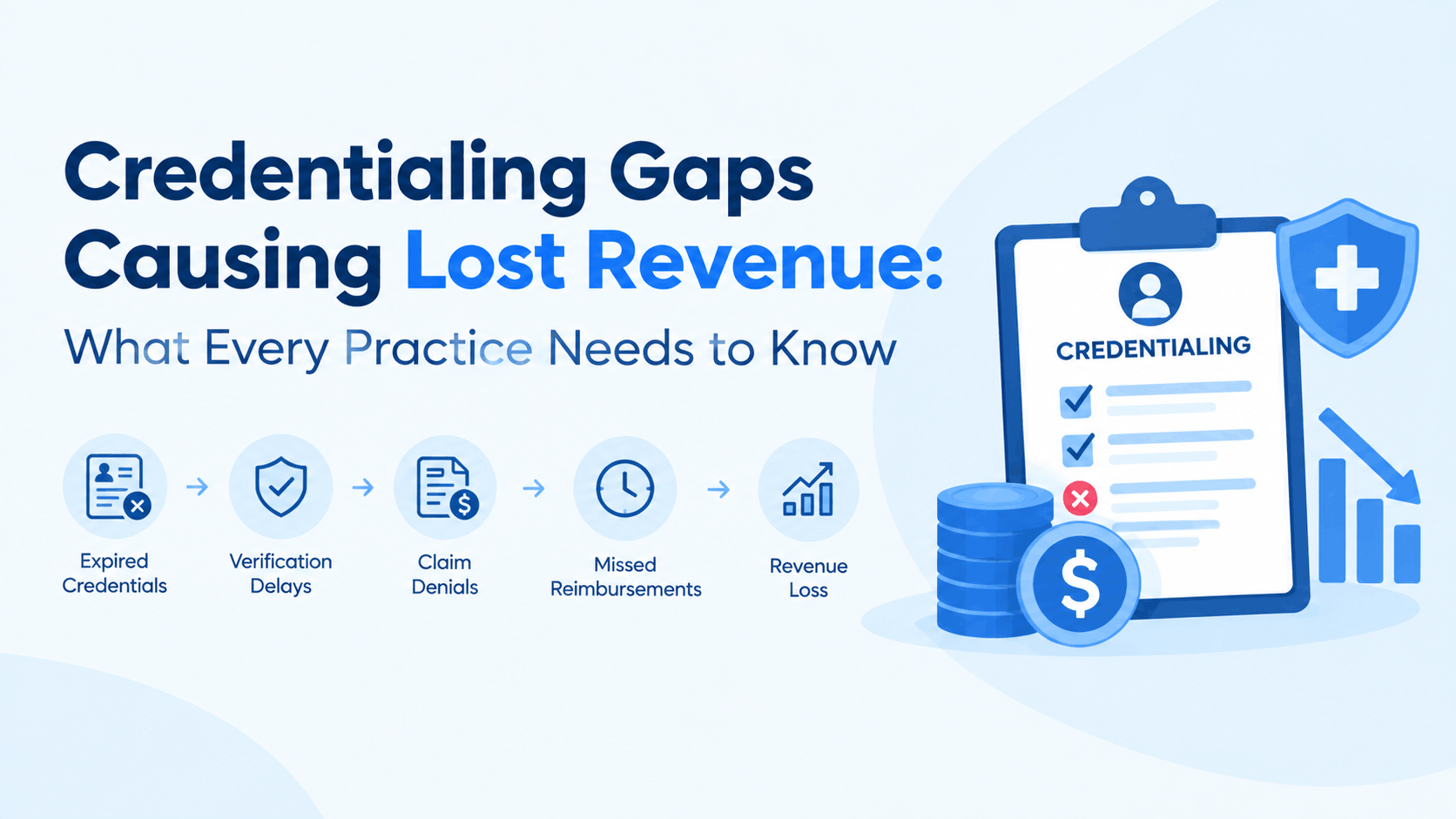
A provider can deliver excellent care and still generate zero revenue for weeks or months if credentialing was not handled correctly. Credentialing gaps are one of the quietest causes of lost revenue in healthcare, because the work happens behind the scenes long before a claim is ever submitted. By the time a practice notices the problem, it usually shows up as a wave of denials with no obvious explanation.
This article covers what credentialing gaps actually look like, why they happen so often, and what practices can do to close them before they cost real money.
Credentialing is the process of verifying a provider’s qualifications and enrolling them with insurance payers so the practice can legally bill for their services. A credentialing gap happens whenever there is a mismatch between when a provider starts seeing patients and when they are actually approved to bill a given payer.
Even a short gap can be expensive. Claims submitted before enrollment is complete are typically denied outright, and depending on the payer, they may not be payable retroactively once the gap is discovered. That means every patient seen during the gap can represent revenue the practice never collects, no matter how well the visit itself was documented and coded.
Credentialing gaps rarely happen because someone ignored the process entirely. They usually happen because credentialing takes longer than practices expect and gets deprioritized against more urgent, visible tasks. A few situations account for most gaps:
The financial impact of a credentialing gap is rarely visible right away. Claims submitted during the gap period are usually denied for reasons that look routine at first, such as “provider not recognized” or “not eligible to bill,” and staff may resubmit them a few times before realizing the real cause is enrollment status rather than a coding or claim error.
By the time the credentialing issue is identified, weeks of claims can be sitting unpaid. Some payers allow retroactive billing back to the provider’s start date once enrollment is approved, but many do not, or they cap how far back a retroactive date can go. In those cases, the revenue from every visit during the gap is simply lost, regardless of how appropriate or well documented the care was.
There is also a hidden cost in staff time. Denied claims from credentialing issues require extra research to diagnose, since the denial reason does not always clearly point to enrollment. That time comes on top of the normal billing workload and often delays other claims from being worked promptly.
Credentialing problems tend to show a similar pattern before anyone identifies the root cause. It is worth investigating further if you notice:
Preventing credentialing gaps comes down to treating credentialing as a scheduled, tracked process rather than a one-time task that gets handled and forgotten.
Start credentialing well before a new provider’s start date, since payer enrollment can take anywhere from a few weeks to several months depending on the payer and the completeness of the application. Building this timeline into hiring plans, rather than starting credentialing once a provider has already accepted an offer, gives the process the runway it actually needs.
It also helps to confirm enrollment status directly with each payer before scheduling patients under that provider, rather than assuming an application in progress means the provider is already approved to bill. A short delay before a provider’s first billable day is far less costly than weeks of denied claims afterward.
Maintaining a centralized tracker for every provider’s enrollment status across all payers, including effective dates and upcoming re-credentialing deadlines, prevents renewals from being missed. Payers often require re-credentialing every few years, and a missed deadline can quietly suspend a provider’s ability to bill even though nothing else about their practice has changed.
Finally, building a clear internal process for what happens when a provider changes locations, adds a new payer or a practice undergoes an ownership change reduces the chance that credentialing gets treated as an afterthought during a busy transition.
If a gap is already affecting your revenue, the priority is to act quickly rather than wait for the situation to resolve on its own. Confirm the provider’s actual enrollment status and effective date with the payer directly, since internal records are not always accurate. Ask specifically whether retroactive billing is available for the gap period and what documentation is required to request it, since some payers will allow this if asked promptly and correctly.
Hold any newly denied claims tied to the same provider and payer until the enrollment issue is resolved, rather than repeatedly resubmitting claims that will keep denying for the same reason. Once the gap is closed, resubmit affected claims as quickly as possible, since many payers apply timely filing limits even to claims that were originally denied due to enrollment issues.
Even well-run practices fall into a few recurring patterns that create credentialing problems. Watch for these:
Credentialing delays can quietly cost a practice thousands of dollars before anyone notices the pattern. At IPIRCM – Intelligent Process Inside LLC, our credentialing services help practices get providers enrolled correctly and on time, track re-credentialing deadlines, and avoid the kind of gaps that lead to denied claims and lost revenue. Whether you are onboarding a new provider or cleaning up enrollment issues with existing ones, our team is ready to help.


“We built IPIRCM to set standards, not follow trends — helping your practice move forward without limits.”
We didn't build these companies to follow trends — we built them to set standards. From IPIPAK's trusted BPO, to IPIRCM's full-cycle U.S. medical billing, to IPITECHNO's cutting-edge IT solutions, every company exists to move your business forward without limits.
Together we are more than three brands. We are one vision: to make business simpler, faster, and stronger for those who dare to grow. It is an honor to lead this group — and a greater honor to serve you.