5600 Palm Lake Circle, Orlando Fl. 32819
info@ipircm.com
877-422-7221

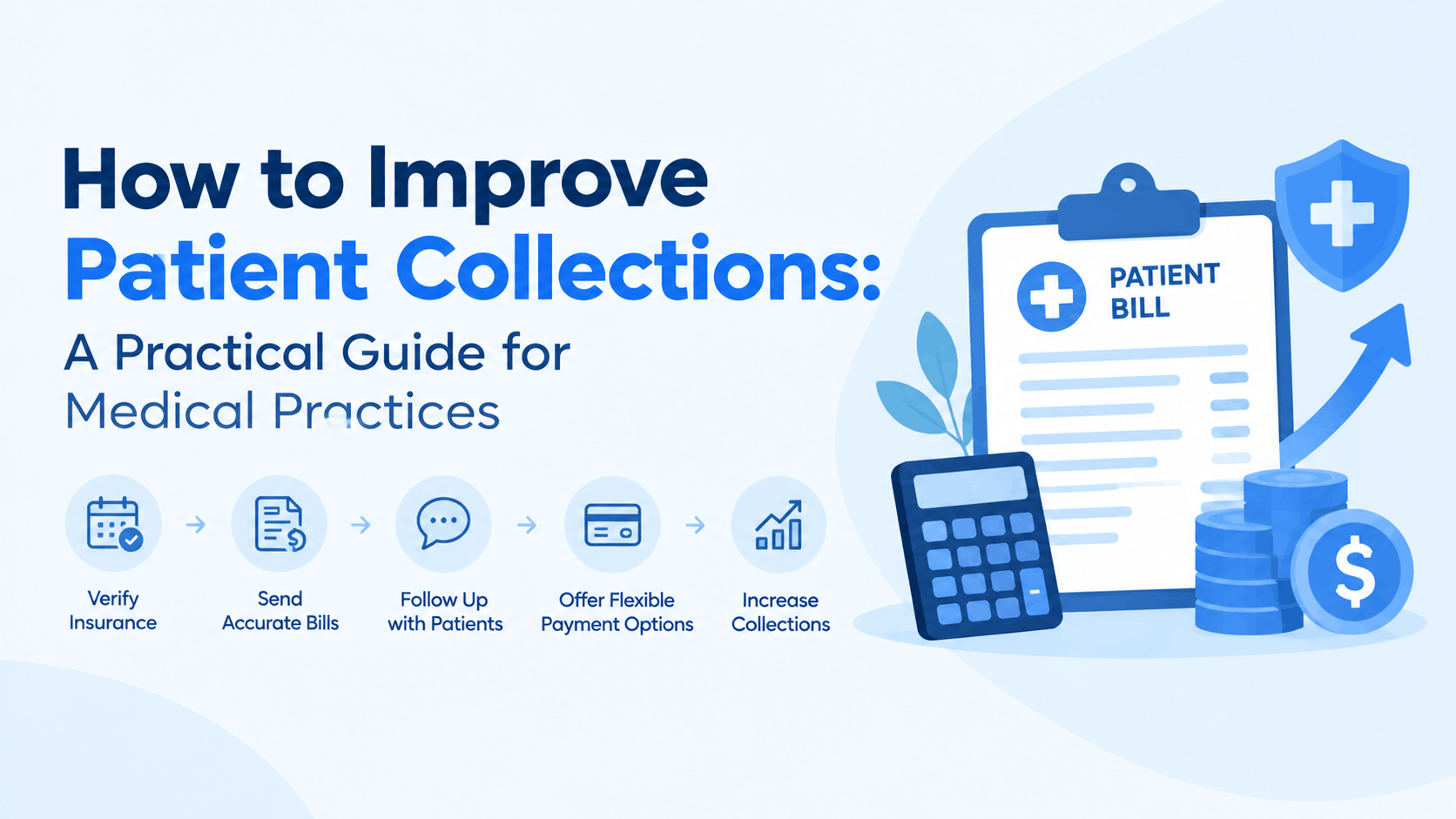
Patient responsibility now makes up a larger share of medical revenue than it used to, as high-deductible health plans and copays have shifted more of the bill directly onto patients. Yet patient collections remain one of the weakest links in many revenue cycles. Balances go out late, statements are confusing, and by the time a practice follows up, the patient has often forgotten what the charge was even for.
Improving patient collections is not just about being more aggressive with billing. It is about making it easier for patients to understand what they owe, when they owe it, and how to pay it, while still following up consistently on balances that go unpaid. This article covers where patient collections typically break down and the practical steps that help practices collect more without damaging the patient relationship.
A decade ago, most of a practice’s revenue came from insurance payers, and patient balances were a smaller, more predictable piece of the picture. That has changed. Deductibles have grown, more employers offer high-deductible plans, and patients are increasingly responsible for a meaningful portion of their care costs before insurance even starts paying.
This shift means practices are now collecting a share of revenue from thousands of individual patients rather than a handful of large payers, and every patient has different circumstances, communication preferences and ability to pay. Many practices are still running patient billing the same way they did years ago, with paper statements, unclear balances and little communication until an account is already overdue.
Patient collections tend to break down for a mix of reasons that build on each other rather than one single cause:
One of the most effective ways to improve collections is to address cost before the patient ever gets a bill. When patients know roughly what they will owe and why, they are far more likely to pay promptly and far less likely to dispute the charge later.
This starts with verifying insurance benefits ahead of the visit so your team knows the patient’s deductible status, copay and coinsurance. Front-desk staff can then share a reasonable estimate at check-in, along with a simple explanation of what it covers. For larger balances, offering to collect a portion of the estimated cost at the time of service, rather than waiting for a bill weeks later, meaningfully improves how much gets collected overall.
Many patient statements are written for insurance systems, not for patients. Codes, adjustment lines and payer jargon confuse people and make them more likely to set the bill aside rather than deal with it. A statement that clearly states the visit date, what was owed, what insurance paid, and what remains due in plain language gets paid faster than one filled with billing terminology.
It also helps to make the amount owed and the due date visually obvious rather than buried in a table, and to include a short, friendly explanation of how to ask questions if something looks wrong. Patients who understand their bill are far more likely to trust it and pay it.
Patients are used to paying for everything else in their lives with a few taps on a phone, and medical bills should not be the exception. Practices that only accept mailed checks or in-person payments are leaving money on the table simply because paying is inconvenient.
Online payment portals, text-to-pay links, saved card options and automatic payment plans all remove friction from the process. The easier it is to pay, the sooner patients tend to do it, and the fewer accounts end up aging into collections.
Not every patient can pay a large balance in full, and treating every unpaid bill the same way often backfires. Offering a structured payment plan, with a clear schedule and automatic charges to a card on file, gives patients a manageable way to pay while still keeping the practice’s cash flow predictable.
Payment plans work best when they are offered proactively, before an account becomes seriously overdue, rather than only after a patient calls in asking for help. Staff should be trained to bring up payment plans as a normal part of the collections conversation, not as a last resort.
Many collection problems start with a simple discomfort: staff do not like asking patients for money, so the conversation gets avoided or rushed. This often means cost estimates are skipped at check-in and balances are not mentioned clearly at checkout.
Training staff to discuss financial responsibility in a calm, matter-of-fact way, the same way they would confirm an appointment time, makes a noticeable difference. Scripts that explain the balance, offer payment options and answer common questions help staff feel confident having these conversations instead of avoiding them.
A single statement is rarely enough to get a bill paid. Practices that collect well tend to follow a structured cadence: an initial statement, a reminder a few weeks later, and a phone call or text for balances that remain unpaid after that. Waiting months to follow up, or following up only sporadically, gives patients every reason to deprioritize the bill.
Automated reminders through text or email can handle much of this work without adding to staff workload, while reserving phone calls for larger balances or accounts that need a more personal touch.
Improving patient collections is hard to manage without visibility into how it is actually performing. A few numbers worth tracking regularly include the percentage of patient balances collected at the time of service, how long it takes on average to collect a patient balance after a statement goes out, and what percentage of patient A/R is aged past 60 or 90 days.
Reviewing these numbers monthly makes it easier to spot whether changes to your process, such as a new payment portal or updated statement design, are actually moving the needle.
Even practices that care about improving collections can run into avoidable problems. Watch for these:
Improving patient collections takes the right combination of clear communication, convenient payment options and consistent follow-up, which is difficult to manage on top of everything else your front desk and billing team already handle. At IPIRCM – Intelligent Process Inside LLC, our billing review services help practices identify where patient collections are breaking down and put a stronger process in place, so fewer balances slip through the cracks. Whether you need to clean up your statement process or build a better follow-up system, our team is ready to help.


“We built IPIRCM to set standards, not follow trends — helping your practice move forward without limits.”
We didn't build these companies to follow trends — we built them to set standards. From IPIPAK's trusted BPO, to IPIRCM's full-cycle U.S. medical billing, to IPITECHNO's cutting-edge IT solutions, every company exists to move your business forward without limits.
Together we are more than three brands. We are one vision: to make business simpler, faster, and stronger for those who dare to grow. It is an honor to lead this group — and a greater honor to serve you.