5600 Palm Lake Circle, Orlando Fl. 32819
info@ipircm.com
877-422-7221

Medical billing has come a long way from paper claims and filing cabinets. Most practices today use some kind of billing software, but not all software is built the same way. There is a big difference between old desktop-based systems and the newer cloud-based platforms that are quickly becoming the industry standard.
If you are still running billing software installed on a single office computer, it is worth understanding why so many practices are making the switch to the cloud. In this article, we will explain what cloud-based medical billing software is, why it matters, and why it is shaping the future of the billing industry.
Cloud-based medical billing software is a system that runs on remote servers instead of a computer sitting in your office. You access it through the internet using a browser or an app, and your data is stored securely online rather than on a local hard drive.
This is different from traditional on-premise software, which needs to be installed on a specific computer and usually only works on that machine or within that office network. With cloud software, your billing team can log in from anywhere, on any device, as long as they have an internet connection.
Traditional desktop billing software served its purpose for years, but it comes with real limitations that are becoming harder to ignore.
Cloud-based systems solve most of these problems by design, which is a big reason why adoption is growing so fast across the healthcare industry.
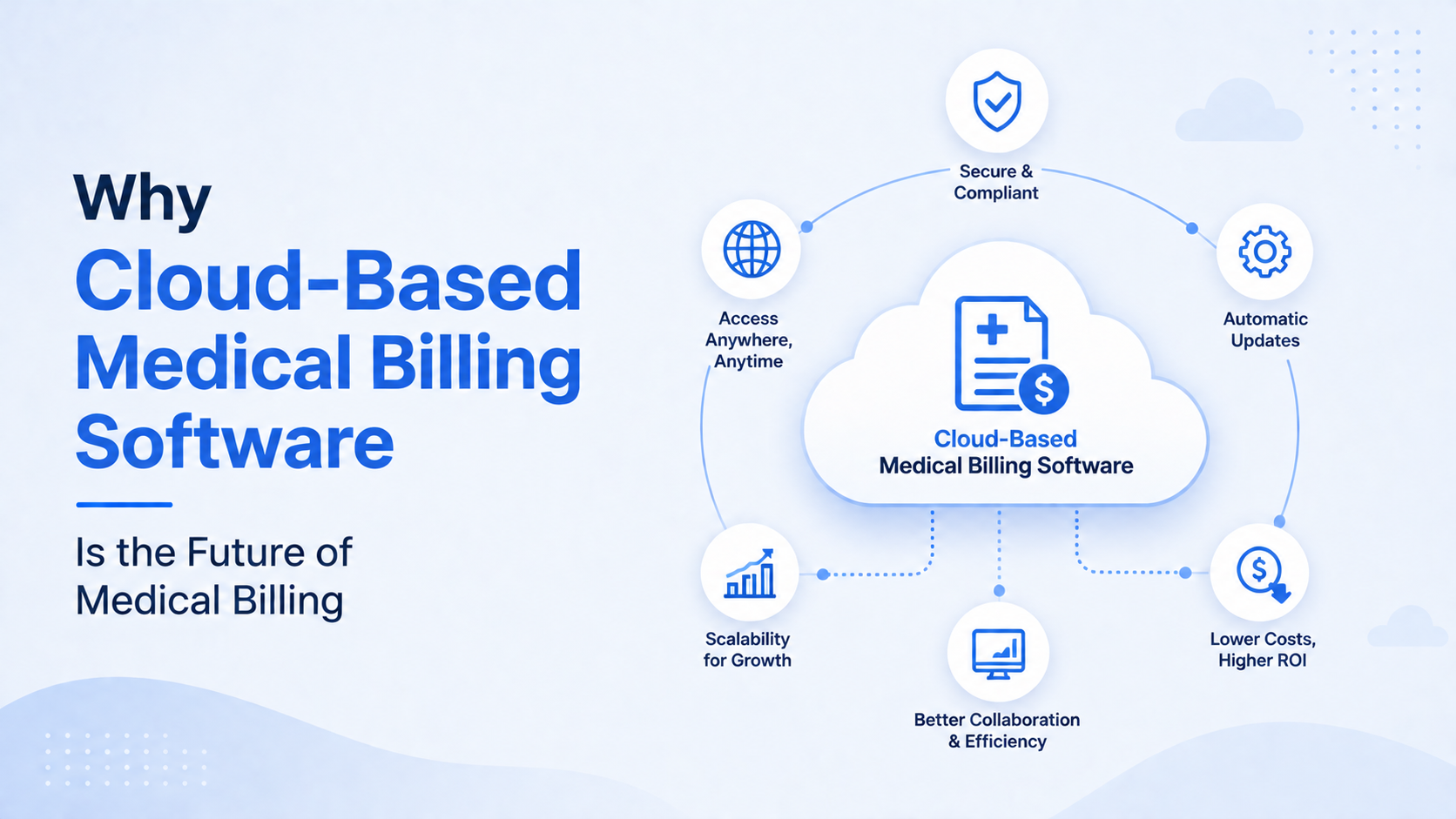
Billing staff are not tied to a single desk or office. Whether they are working from home, another clinic location, or even traveling, they can log in and manage claims, check patient balances, or review reports in real time.
Cloud software usually works on a subscription model instead of a large upfront purchase. Practices avoid the cost of expensive servers, IT infrastructure, and installation, which makes it easier for smaller practices to access the same quality tools as larger health systems.
Healthcare billing rules and payer requirements change often. Cloud platforms are updated automatically by the provider, so practices do not have to worry about running outdated software or missing a compliance update.
This might surprise some people, but cloud systems are often more secure than local servers. Reputable cloud billing platforms use encryption, regular backups, and advanced security monitoring that most individual practices could never afford to set up on their own.
Cloud software gives practices instant access to dashboards showing claim status, denial rates, and collections. This makes it much easier to spot problems early and make informed financial decisions instead of waiting for a monthly report.
As a practice grows, adding new users, locations, or providers is usually as simple as adjusting the subscription. There is no need to install new hardware or transfer data between systems.
Modern cloud billing platforms are built to connect easily with electronic health records, practice management systems, and clearinghouses. This reduces duplicate data entry and keeps information consistent across systems.
If something happens to your office, like a fire, flood, or hardware failure, your billing data stays safe because it is stored off-site on secure servers. Recovering from a disaster becomes far less stressful when your data was never tied to one physical location in the first place.
Some practices hesitate to make the switch, and their concerns are understandable.
These concerns are valid, but most are outweighed by the efficiency and security gains that come with a well-chosen cloud platform.
The direction the industry is heading in makes cloud adoption almost inevitable. A few reasons stand out.
As more practices see the day-to-day benefits of cloud billing—from fewer errors to faster payments—it is becoming less of an optional upgrade and more of a basic requirement for staying competitive.
Switching to cloud-based medical billing software is a smart move, but the software is only part of the equation. Getting the most out of it takes an experienced billing team that knows how to use the technology to reduce denials, speed up payments, and keep your revenue cycle running smoothly.
IPIRCM combines modern cloud-based billing tools with hands-on medical billing services built around your practice’s needs. Get in touch with IPIRCM today to see how the right technology and the right team can improve your billing process from end to end.


“We built IPIRCM to set standards, not follow trends — helping your practice move forward without limits.”
We didn't build these companies to follow trends — we built them to set standards. From IPIPAK's trusted BPO, to IPIRCM's full-cycle U.S. medical billing, to IPITECHNO's cutting-edge IT solutions, every company exists to move your business forward without limits.
Together we are more than three brands. We are one vision: to make business simpler, faster, and stronger for those who dare to grow. It is an honor to lead this group — and a greater honor to serve you.