5600 Palm Lake Circle, Orlando Fl. 32819
info@ipircm.com
877-422-7221

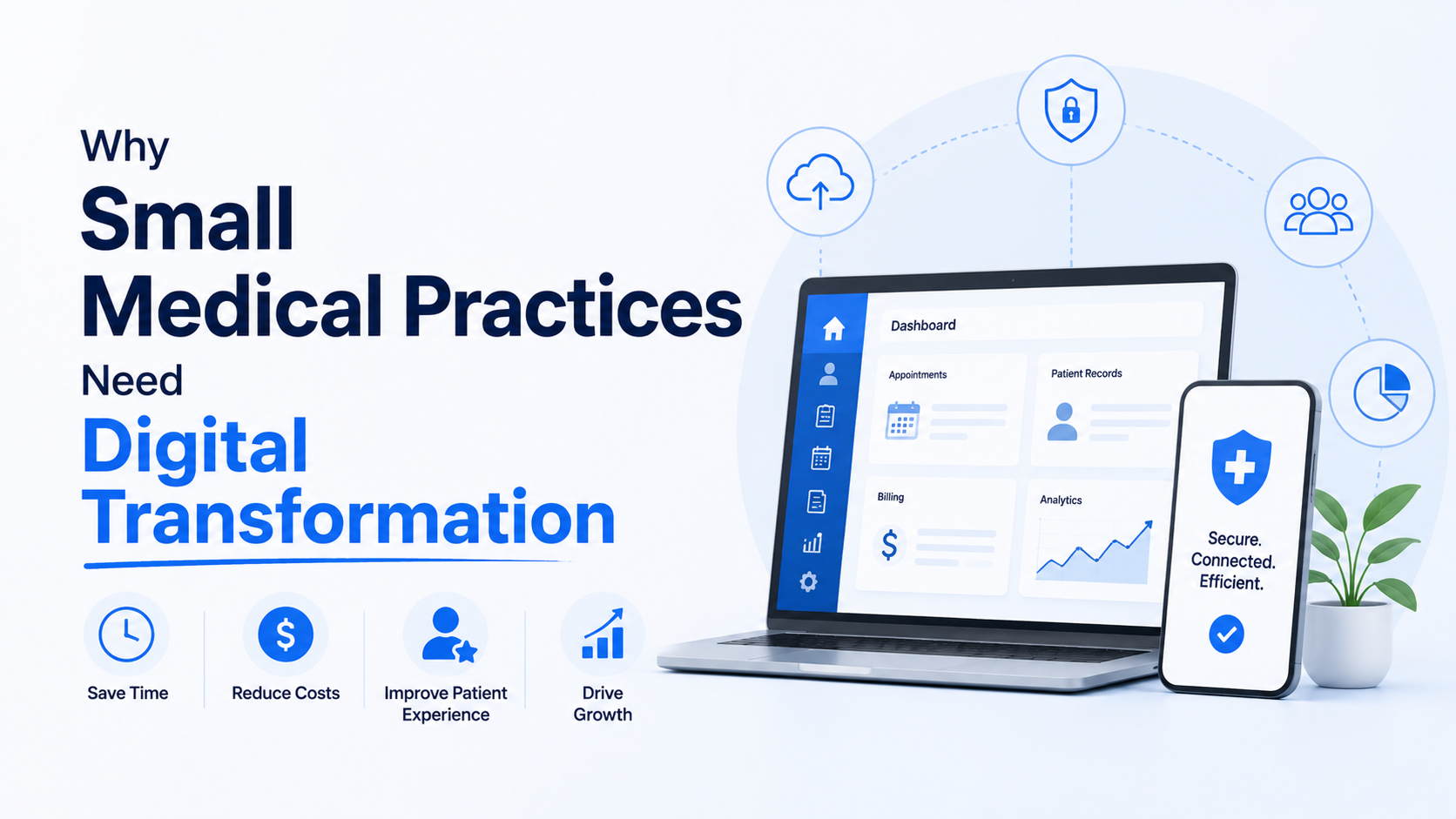
Healthcare is becoming increasingly technology-driven, and small medical practices can no longer rely on traditional administrative processes to remain competitive. Patients expect convenient scheduling, faster communication, online payment options, and seamless healthcare experiences. At the same time, providers face growing administrative burdens, staffing shortages, evolving compliance requirements, and increasing financial pressures.
For many small practices, digital transformation is no longer a future goal, it is a necessity for long-term growth and sustainability. By adopting modern technologies and optimizing operational workflows, healthcare organizations can improve efficiency, enhance patient experiences, strengthen revenue cycle performance, and reduce administrative costs.
Digital transformation does not mean replacing healthcare professionals with technology. Instead, it involves using technology strategically to support providers, streamline processes, and improve overall practice performance.
Digital transformation refers to the integration of modern technologies into healthcare operations to improve clinical, administrative, and financial processes.
For small medical practices, this may include implementing electronic health records (EHRs), patient portals, telehealth platforms, automated scheduling systems, digital billing solutions, and advanced revenue cycle management tools.
The goal is to eliminate inefficient manual processes and create a more connected, efficient, and patient-focused healthcare environment.
Small healthcare organizations often operate with limited resources and smaller administrative teams. As healthcare regulations become more complex and patient expectations continue to rise, managing operations manually becomes increasingly difficult.
Many practices struggle with delayed reimbursements, claim denials, staffing limitations, scheduling inefficiencies, and growing administrative workloads. These challenges can negatively impact both patient satisfaction and financial performance.
Digital transformation helps address many of these obstacles by improving efficiency and reducing operational bottlenecks.
Administrative tasks consume a significant amount of time in most medical practices. Scheduling appointments, verifying insurance, managing patient records, processing claims, and handling payments often require substantial manual effort.
Digital tools help automate repetitive tasks, allowing staff to focus on higher-value responsibilities. Automation reduces errors, speeds up workflows, and improves overall productivity across the organization.
When processes become more efficient, providers can spend less time on paperwork and more time delivering quality patient care.
Patient expectations have changed dramatically in recent years. Many patients now expect the same level of convenience from healthcare providers that they receive from banks, retailers, and other service organizations.
Digital transformation enables practices to offer online appointment scheduling, patient portals, automated reminders, electronic forms, and secure communication channels.
These technologies improve convenience and engagement while reducing missed appointments and administrative delays. A positive patient experience can strengthen retention rates and contribute to long-term practice growth.
Financial stability remains one of the most important concerns for small medical practices. Revenue cycle inefficiencies can result in claim denials, delayed reimbursements, and increased accounts receivable balances.
Digital solutions help improve revenue cycle management by streamlining eligibility verification, claims processing, payment posting, and denial tracking. These improvements support faster reimbursements and more consistent cash flow.
Practices that invest in digital revenue cycle tools often experience improved collection rates and reduced administrative burdens.
Medical billing errors can significantly impact revenue and operational efficiency. Even minor mistakes in coding, documentation, or insurance information can lead to denied claims and delayed payments.
Digital billing systems help reduce these risks by improving accuracy and identifying potential issues before claims are submitted. Automated claim scrubbing and validation tools help ensure cleaner claims and higher first-pass acceptance rates.
As a result, practices spend less time correcting errors and more time focusing on patient care and business growth.
One of the most valuable benefits of digital transformation is access to real-time data and performance insights.
Modern healthcare technology allows practices to monitor key performance indicators such as appointment volume, claim acceptance rates, collection performance, patient retention, and accounts receivable trends.
These insights help practice leaders make informed decisions and identify opportunities for operational improvement. Data-driven decision-making allows organizations to respond more effectively to changing business conditions.
Healthcare organizations must comply with strict regulatory requirements related to patient privacy and data protection. Managing compliance manually can be challenging, especially for smaller practices with limited administrative resources.
Digital systems often include built-in security features such as access controls, audit trails, encryption, and automated documentation processes. These capabilities help organizations protect sensitive patient information while supporting regulatory compliance efforts.
Strong cybersecurity and compliance practices also help maintain patient trust and reduce organizational risk.
Telehealth has become an important component of modern healthcare delivery. Digital transformation enables practices to offer virtual consultations, follow-up appointments, and remote patient interactions.
For small medical practices, telehealth can improve patient access, increase appointment availability, and create new opportunities for practice growth.
Patients benefit from greater convenience, while providers can expand services without significantly increasing overhead costs.
Healthcare staffing shortages continue to affect organizations across the country. Small practices often face difficulties hiring and retaining qualified administrative personnel.
Digital transformation helps reduce the burden on existing staff by automating repetitive administrative tasks and improving workflow efficiency. Technology allows smaller teams to manage larger workloads without sacrificing quality or patient service.
This can improve employee satisfaction while reducing operational stress.
Successful digital transformation extends beyond implementing technology. It requires efficient processes, accurate billing workflows, and effective revenue cycle management.
IPIRCM helps healthcare providers modernize financial operations through comprehensive services, including:
By combining industry expertise with technology-driven solutions, IPIRCM helps small medical practices improve efficiency, reduce administrative burdens, strengthen collections, and optimize financial performance.
The healthcare industry will continue to evolve as technology becomes increasingly integrated into daily operations. Small medical practices that embrace digital transformation are better positioned to improve patient experiences, enhance operational efficiency, strengthen financial performance, and remain competitive in a rapidly changing environment.
Investing in modern healthcare technology is not simply about keeping up with industry trends. It is about building a stronger, more efficient practice that can adapt to future challenges and opportunities.
IPIRCM provides customized medical billing solutions designed to help healthcare organizations streamline operations, improve revenue performance, and support long-term growth in today’s digital healthcare landscape.


“We built IPIRCM to set standards, not follow trends — helping your practice move forward without limits.”
We didn't build these companies to follow trends — we built them to set standards. From IPIPAK's trusted BPO, to IPIRCM's full-cycle U.S. medical billing, to IPITECHNO's cutting-edge IT solutions, every company exists to move your business forward without limits.
Together we are more than three brands. We are one vision: to make business simpler, faster, and stronger for those who dare to grow. It is an honor to lead this group — and a greater honor to serve you.