5600 Palm Lake Circle, Orlando Fl. 32819
info@ipircm.com
877-422-7221

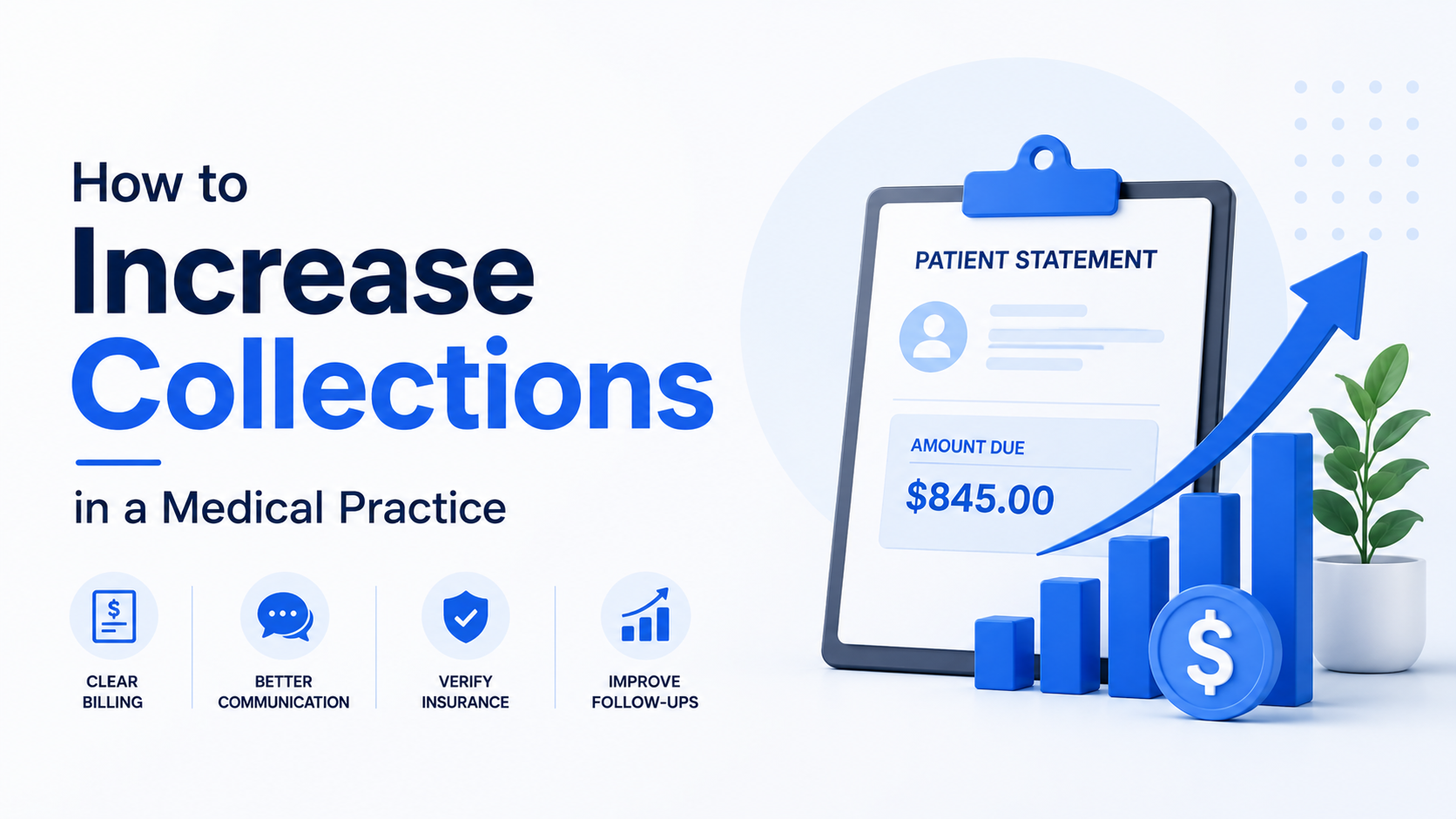
Maintaining a healthy cash flow is essential for the long-term success of any healthcare organization. While delivering quality patient care remains the primary focus, a medical practice cannot thrive without consistent revenue collection. Unfortunately, many practices struggle with delayed payments, claim denials, inefficient billing processes, and increasing patient payment responsibilities.
As healthcare reimbursement becomes more complex, providers must adopt effective revenue cycle management strategies to improve collections and reduce revenue leakage. Increasing collections is not simply about collecting more money from patients, it involves optimizing every stage of the billing process, from patient registration to final payment.
Healthcare organizations that focus on improving billing accuracy, reducing denials, streamlining workflows, and enhancing patient financial communication are often able to collect a larger percentage of their earned revenue while maintaining positive patient relationships.
Poor collection performance can significantly impact a practice’s financial health. When claims remain unpaid or patient balances go uncollected, organizations face cash flow challenges that can affect staffing, technology investments, and overall growth.
Many practices lose revenue not because services were not provided, but because of administrative errors, delayed claim submissions, insurance verification issues, or ineffective follow-up procedures. Improving collections requires identifying and addressing these challenges throughout the revenue cycle.
One of the most effective ways to improve collections is to verify patient insurance coverage before services are provided. Insurance information can change frequently, and relying on outdated information often results in claim denials and payment delays.
By confirming eligibility, benefits, coverage limitations, and authorization requirements before appointments, healthcare providers can reduce billing errors and improve claim acceptance rates. This proactive approach also helps patients understand their financial responsibilities before receiving treatment.
The front desk plays a critical role in revenue collection. Patient demographic errors, incomplete information, and missed copay collections can create billing problems that follow a claim throughout the revenue cycle.
Staff should be trained to accurately collect patient information, verify insurance details, explain payment policies, and collect copays at the time of service. Establishing clear financial expectations early helps reduce outstanding balances and improves overall collection performance.
Claim denials remain one of the biggest obstacles to maximizing collections. Every denied claim increases administrative costs and delays reimbursement.
Submitting clean claims requires accurate coding, complete documentation, proper modifier usage, and compliance with payer requirements. Practices that invest in claim quality assurance processes often experience higher first-pass acceptance rates and faster payments.
Reducing errors before claim submission is far more efficient than correcting and resubmitting denied claims later.
Even well-managed practices experience claim denials. However, the difference between successful and struggling organizations often lies in how quickly denials are identified and resolved.
A structured denial management process helps practices analyze denial trends, identify recurring issues, and implement corrective actions. Regularly reviewing denial reports can reveal problems related to coding, documentation, eligibility verification, or payer-specific requirements.
Addressing the root causes of denials can significantly improve future collection rates.
Outstanding accounts receivable can quickly become a major financial burden if not managed effectively. Delayed follow-up often reduces the likelihood of collecting payments from insurance companies and patients.
Practices should establish consistent follow-up procedures for unpaid claims and aging balances. Prompt communication with payers and patients helps resolve issues before they become difficult to recover.
Monitoring aging reports regularly allows organizations to prioritize high-value accounts and reduce the number of claims that remain unpaid for extended periods.
Patient financial responsibility continues to increase due to rising deductibles, copays, and coinsurance requirements. As a result, patient collections have become a larger component of healthcare revenue.
Providing flexible payment options can make it easier for patients to pay their balances. Online payment portals, credit card payments, recurring payment plans, and digital billing solutions improve convenience and encourage faster payments.
Patients are more likely to pay when the process is simple, transparent, and accessible.
Improving collections requires ongoing performance monitoring. Healthcare organizations should regularly review revenue cycle metrics to identify opportunities for improvement.
Some of the most important metrics include:
Tracking these indicators helps practices evaluate financial performance and make informed operational decisions.
Coding accuracy directly affects reimbursement levels and collection success. Even small coding mistakes can lead to underpayments, claim denials, audits, or compliance concerns.
Healthcare providers should ensure coding staff remain updated on current ICD-10, CPT, and payer-specific requirements. Regular coding audits can help identify errors before they impact revenue.
Accurate coding not only improves collections but also reduces compliance risks.
Managing every aspect of the revenue cycle internally can be challenging, particularly for growing practices facing staffing shortages and increasing administrative demands.
Partnering with an experienced medical billing company allows healthcare providers to access specialized expertise, advanced technology, and dedicated billing resources. Professional revenue cycle management services often improve billing accuracy, accelerate reimbursements, reduce denials, and enhance collection performance.
Organizations that leverage expert support can focus more on patient care while maintaining stronger financial outcomes.
Successful collection strategies require more than simply sending claims and invoices. They depend on a well-managed revenue cycle that identifies inefficiencies, reduces errors, and maximizes reimbursement opportunities.
IPIRCM helps healthcare providers strengthen financial performance through comprehensive services, including:
By optimizing every stage of the billing process, IPIRCM helps practices reduce claim denials, accelerate payments, improve collections, and increase overall revenue.
Increasing collections in a medical practice requires a proactive approach that addresses both insurance and patient payment challenges. From accurate eligibility verification and clean claim submission to denial management and patient payment solutions, every step of the revenue cycle plays a role in financial success.
IPIRCM provides customized medical billing and revenue cycle management solutions designed to help healthcare providers increase collections, reduce administrative burdens, and achieve long-term financial stability.


“We built IPIRCM to set standards, not follow trends — helping your practice move forward without limits.”
We didn't build these companies to follow trends — we built them to set standards. From IPIPAK's trusted BPO, to IPIRCM's full-cycle U.S. medical billing, to IPITECHNO's cutting-edge IT solutions, every company exists to move your business forward without limits.
Together we are more than three brands. We are one vision: to make business simpler, faster, and stronger for those who dare to grow. It is an honor to lead this group — and a greater honor to serve you.