5600 Palm Lake Circle, Orlando Fl. 32819
info@ipircm.com
877-422-7221

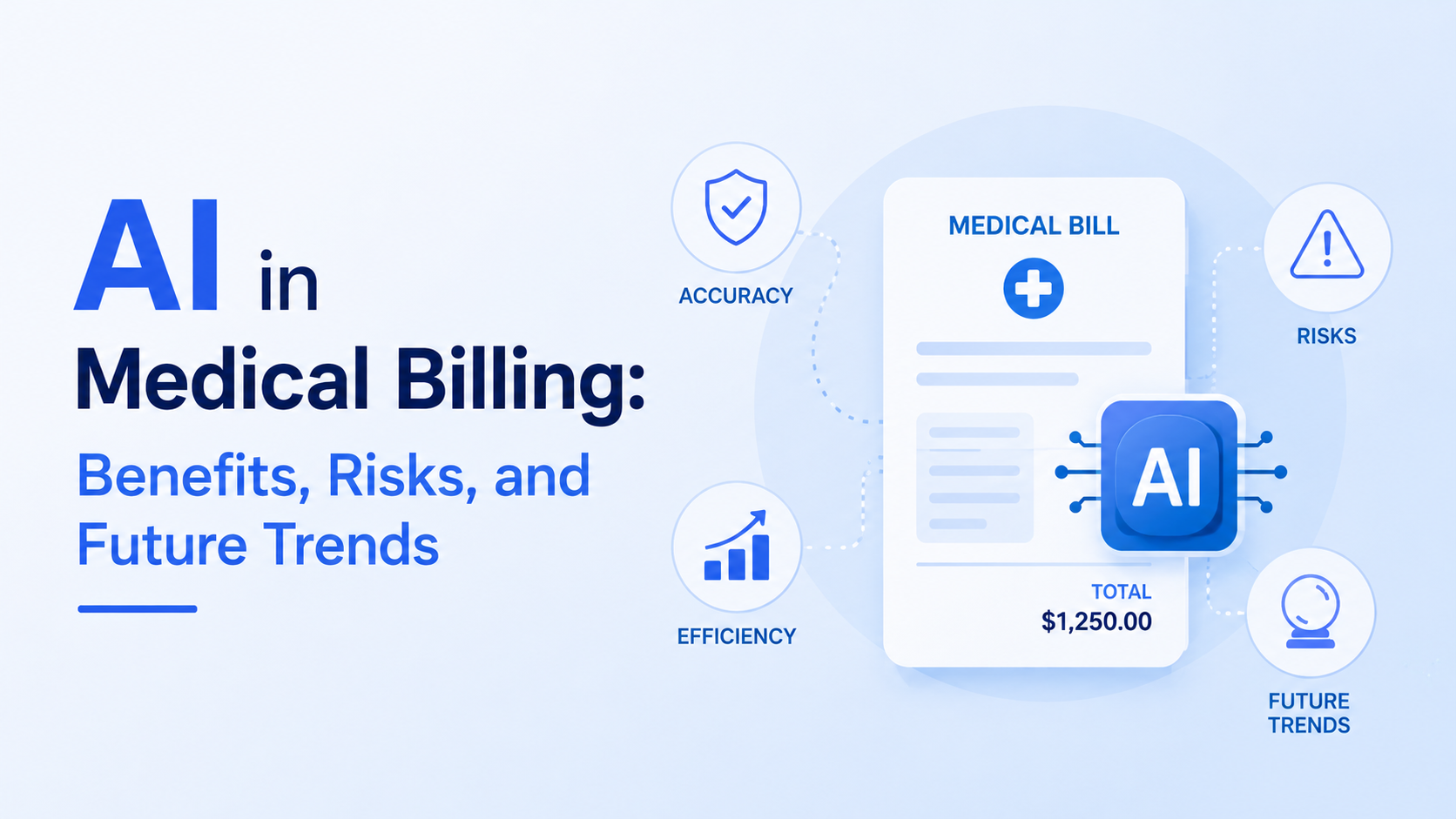
The healthcare industry is undergoing a major transformation as Artificial Intelligence (AI) becomes an increasingly important part of administrative and financial operations. Medical billing, once heavily dependent on manual processes, is evolving through intelligent automation, predictive analytics, and machine learning technologies.
Healthcare providers continue to face challenges such as claim denials, coding errors, regulatory changes, staffing shortages, and rising operational costs. AI-powered medical billing solutions help address these issues by improving accuracy, reducing administrative workloads, and accelerating reimbursements.
As a trusted medical billing and revenue cycle management partner, IPIRCM helps healthcare providers optimize financial performance through services including medical billing, revenue cycle management, insurance verification, pre-authorizations, claim submission, payment posting, credentialing, and accounts receivable management. By combining industry expertise with advanced technology, healthcare organizations can improve efficiency and support sustainable revenue growth.
AI in medical billing refers to the use of machine learning, natural language processing (NLP), predictive analytics, and automation technologies to streamline billing and revenue cycle processes. These technologies can automate claim creation and submission, identify coding errors before claims are sent, verify patient eligibility, predict claim denials, process payments, analyze billing patterns, and improve overall revenue cycle performance.
Rather than replacing billing professionals, AI serves as a powerful tool that enhances productivity, accuracy, and decision-making throughout the billing process.
Medical coding errors remain one of the leading causes of claim denials and reimbursement delays. AI-powered coding systems can analyze clinical documentation and recommend the most appropriate ICD-10, CPT, and HCPCS codes.
This helps healthcare organizations:
As a result, providers can maximize revenue while reducing billing-related risks.
Traditional claims processing often involves multiple manual steps that consume valuable staff time and resources. AI can automatically review claims, identify missing information, detect potential errors, and submit cleaner claims more efficiently.
This streamlined process helps providers receive reimbursements faster and maintain healthier cash flow.
Claim denials continue to be a major challenge in healthcare revenue cycle management. AI systems can analyze historical billing data and identify patterns that commonly lead to denials, including eligibility issues, coding discrepancies, documentation gaps, and authorization problems.
By addressing these concerns before claims are submitted, healthcare organizations can significantly reduce denial rates and improve reimbursement outcomes.
AI provides real-time visibility into financial performance and billing operations. It enables healthcare organizations to monitor key metrics such as:
These insights support informed decision-making and improved revenue cycle efficiency. Companies like IPIRCM use advanced revenue cycle management strategies to strengthen collections and support financial stability.
Insurance verification is often a time-consuming process that can delay patient care and reimbursement. AI-powered systems can instantly verify eligibility, confirm benefits coverage, review payer requirements, and identify authorization needs.
This automation reduces administrative burdens while improving billing accuracy and operational efficiency.
Healthcare organizations spend considerable resources on administrative tasks related to billing and claims management. AI helps reduce costs by automating repetitive processes, minimizing manual data entry, decreasing billing errors, and improving staff productivity.
These efficiencies allow organizations to allocate more resources toward patient care and strategic growth initiatives.
Patients increasingly expect transparency and convenience when it comes to healthcare billing. AI can generate accurate cost estimates, automate payment reminders, provide self-service billing options, and improve communication throughout the billing process.
A smoother and more transparent billing experience contributes to higher patient satisfaction and stronger provider-patient relationships.
While AI offers substantial benefits, healthcare organizations must also be aware of the challenges and risks associated with its implementation.
Medical billing systems contain highly sensitive patient information protected by HIPAA regulations. The use of AI introduces concerns related to data breaches, cyberattacks, unauthorized access, and compliance violations.
Healthcare organizations must ensure that AI platforms adhere to strict security protocols and privacy standards to protect patient data.
AI systems rely on historical data to learn and make recommendations. If the underlying data contains inaccuracies or biases, the AI may produce flawed results.
Potential consequences include:
Human oversight remains essential to ensure accuracy, fairness, and compliance.
Healthcare regulations are constantly evolving, requiring billing systems to adapt quickly. AI solutions must stay current with ICD updates, CPT revisions, Medicare policies, and commercial payer requirements.
Organizations should work with experienced medical billing partners who actively monitor regulatory changes and maintain compliance.
Although AI can generate long-term savings, the initial implementation process may require significant investment.
Costs may include:
Smaller practices may find these upfront expenses challenging, making careful planning essential for successful adoption.
Relying too heavily on AI can create operational risks if human oversight is reduced. Healthcare providers should continue to maintain:
The most effective approach combines AI-driven efficiency with expert human judgment.
Future AI systems are expected to become even more effective at predicting claim denials before submission. By identifying potential issues early, providers can achieve higher first-pass acceptance rates, faster reimbursement cycles, and lower rework costs.
Predictive denial management will play a critical role in improving revenue cycle performance.
Generative AI is expected to transform clinical documentation by assisting healthcare providers with note summarization, documentation drafting, coding support, and compliance-related tasks.
These capabilities can significantly reduce administrative workloads while improving documentation quality and coding accuracy.
End-to-end revenue cycle automation will become increasingly common as AI technologies continue to advance. Future systems may automate:
This level of automation will create a more efficient and connected revenue cycle from patient registration through final reimbursement.
Advanced AI-powered dashboards will provide healthcare organizations with immediate access to critical financial insights. Providers will be able to monitor:
These capabilities will support faster, data-driven decision-making and improved financial planning.
Future patient engagement platforms will leverage AI to deliver:
These innovations will help improve patient satisfaction while also strengthening collection rates and financial outcomes.
As healthcare billing becomes increasingly technology-driven, providers need experienced partners who understand both revenue cycle management and emerging innovations.
IPIRCM supports healthcare organizations through comprehensive services that include:
By combining industry expertise, process optimization, and advanced billing technologies, IPIRCM helps healthcare providers reduce denials, accelerate reimbursements, improve operational efficiency, and focus more attention on delivering quality patient care.
AI is revolutionizing the way healthcare organizations manage billing, claims, and revenue cycles. Whether you’re looking to reduce claim denials, improve coding accuracy, accelerate reimbursements, or enhance overall financial performance, IPIRCM can help. Our experienced team combines advanced technology with proven revenue cycle management expertise to streamline operations and maximize revenue. Contact IPIRCM today to discover how our comprehensive medical billing and RCM services can support your practice’s growth and long-term success.


“We built IPIRCM to set standards, not follow trends — helping your practice move forward without limits.”
We didn't build these companies to follow trends — we built them to set standards. From IPIPAK's trusted BPO, to IPIRCM's full-cycle U.S. medical billing, to IPITECHNO's cutting-edge IT solutions, every company exists to move your business forward without limits.
Together we are more than three brands. We are one vision: to make business simpler, faster, and stronger for those who dare to grow. It is an honor to lead this group — and a greater honor to serve you.